107 Results for : rustle
-

-
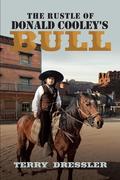
The Rustle of Donald Cooley's Bull
The Rustle of Donald Cooley's Bull: ab 9.99 €- Shop: ebook.de
- Price: 9.99 EUR excl. shipping
-
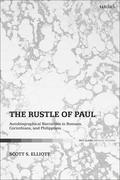
The Rustle of Paul
The Rustle of Paul - Autobiographical Narratives in Romans Corinthians and Philippians: ab 32.99 €- Shop: ebook.de
- Price: 32.99 EUR excl. shipping
-
Romantic Piano Concerto Vol.42
Andrew Litton (Dir) // We went to Norway for this one - and rightly so as the recording reveals that there's more to Norwegian Romantic Piano Concertos than Grieg in A minor. While Sinding is at least a name to most people (if only for The Rustle of Spring) Alnaes is almost completely unknown outside his native land, yet it is perhaps this latter's concerto which makes the bigger impression.- Shop: odax
- Price: 15.21 EUR excl. shipping
-
-
La Chanson D'eve
Gabriel Fauré, La Chanson d'Eve, op. 95 Katherine Bergeron, voice, Dana Gooley, piano. Recorded in Grant Recital Hall, Brown University, June 2009. 1. Paradis 2. Prima Verba 3. Roses ardentes 4. Comme Dieu rayonne 5. L'Aube blanche 6. L'Eau vivante 7. Veilles-tu, ma senteur de soleil 8. Dans un parfum de roses blanches 9. Crépuscule 10. O Mort, poussière d'étoiles Fauré began composing La Chanson d'Eve in 1906, marking what some critics considered a "new manner," and his first real turn to modernism. He started from a book of poems by the same name published two years earlier by the Belgian symbolist Charles Van Lerberghe. The ten poems he set to music together retell the story of Creation, though with a crucial twist. This time there is no Adam, no forbidden fruit, no other sin but speech. In the beginning God created only woman: Eve awakens in a dream of Paradise and, before she knows it, she is singing. Or, as she puts it, she feels a dream resounding through her. "How it sings in my voice," she announces near the beginning, "this long murmuring soul of forest and spring!" Here, in effect, was a representation of the original rustle of language and her exclamation is both announcement and question. For Eve does not know how it happens. She "sings like a child," as one commentator put it, "sings without thinking." She utters her feeling and feels her utterance, wondering at all the new sensations-the sounds in her head, the breath on her lips. And in this unintentionally resonant moment, the word (and the world) felt very good indeed. This was, of course, a marvelous premise for a song cycle but, as Fauré tells it, the good feeling does not last long. You can imagine how it goes: Eve soon begins to think, to question, to bend her words according to her will. But none of this will satisfy. She ends up asking more and more. By the sixth song her thought goes feverish, by the eighth, benumbed. Predictably, as she sees her dream recede, the tale is nearly over. In the dark night of the ninth song, Eve is alone, desperate now for the lost murmur of Paradise ("I listen until it hurts," she cries). And, in the tenth, she finds what she is looking for, although essentially at her peril. For death alone will enable it's return: she gets her wish, and reclaims her Paradise, only by giving up her voice. The ten songs are connected not only through this poetic narrative but also through two musical motifs in the piano line. Both make an appearance in the opening song, "Paradis," which functions like a vast theatrical tableau for the whole set. A rising, naked arpeggio in the first measures announces the stillness of Paradise and the dawning of the "first morning of the world." Later that line warms and blossoms into a fecund chromatic figure pointing to the "blue garden" of Paradise. These two figures recur throughout the cycle, with a dream's surreal logic, both to comment on the developing narrative and to remind Eve exactly where she is. -Katherine Bergeron.- Shop: odax
- Price: 19.23 EUR excl. shipping
-
Lebroba
Andrew Cyrilles Albumtitel Lebroba ist eine Kombination aus Leland, Brooklyn und Baltimore, den Geburtsorten der Protagonisten dieser Aufnahme, die drei unabhängige Denker der kreativen Musik zusammenbringt. Jeder von ihnen hatte seinen ersten Auftritt auf einer ECM-Aufnahme schon vor langer Zeit: Schlagzeuger Andrew Cyrille auf Marion Browns Afternoon of a Georgia Faun (1970), Trompeter Wadada Leo Smith mit seinem Klassiker Divine Love (1978) und Gitarrist Bill Frisell auf Eberhard Webers Fluid Rustle ( 1979), es sind Musiker von nachhaltigem Einfluss. Cyrille ist ein großzügiger Leader, der seinen Mitspielern viel Raum gibt, und alle drei Musiker bringen Kompositionen ein, wobei sich "Turiya", Wadadas elegante Hommage an Alice Coltrane, über 17 Minuten hin nach und nach entfaltet. In seinen eigenen Stücken, darunter der Titeltrack und das abschließende "Pretty Beauty", legt Cyrille selten den Fokus auf das Schlagzeug, sondern spielt lieber melodisch und interaktiv. Es gibt Referenzen zu westafrikanische Musik und zum Blues sowie zur Geschichte des Jazz-Drummings, aber Cyrilles Priorität ist heute ein elliptischer Stil, bei dem das Metrum eher impliziert als angegeben wird.- Shop: odax
- Price: 15.25 EUR excl. shipping


