24 Results for : graciousness
-
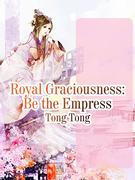
Royal Graciousness: Be the Empress
Royal Graciousness: Be the Empress: ab 6.49 €- Shop: ebook.de
- Price: 6.49 EUR excl. shipping
-
Tsunami Project: Sky in the Morning
Creative Music Alliance is a circle of musicians active on the creative music scene in Atlanta, Georgia, all of whom are recording artists and many of whom had come into association with each other via Julie Dexter's Ketch-A-Vibe Tea Room. Responding with great enthusiasm to collectively contribute their talent, time, and energy via a recording effort to provide relief funding for victims of the December, 2004 Indonesian tsunami, these 17 musicians - Julie Dexter, Mausiki Scales, Kinah Boto, Venuseven, Ede Wright, Takana Miyamoto, Kebbi Williams, Russell Gunn, Jerome Crichton, Shanti Om, Fhena, Ali Barr, Anton Harris, Dashill Smith, Khari Simmons, Immanuel Zechariah - under the direction of Mamaniji Azanyah, have produced a compassionate and timeless tribute: Tsunami Project: Sky In The Morning CD. CREATIVE MUSIC ALLIANCE TSUNAMI PROJECT: Sky In The Morning Fhena - Spoken Word Venuseven (Ingrid Sibley/Dorothy "Dee" Bell) - Vocals Julie Dexter - Vocals Shanti Om - Vocals Immanuel Zechariah -Didgeridoo / Soprano Saxophone Mamaniji Azanyah - Bass Mausiki Scales - Fender Rhodes Electric Piano Takana Miyamoto - Keyboards Ede Wright - Guitar Jerome Crichton - Drums Kinah Boto - Iyo Drums Russell Gunn- Trumpet Ali Barr - Fluglehorn Anton Harris - Alto Flute Kebbi Williams - Tenor Saxophone Dashill Smith - Bass Clarinet Khari Simmons - Spirit Bass Ragenia Waddada - Graphic Artist / Photography Tsunami Project: Sky In The Morning © 2005 Mamaniji Azanyah Conceived, Composed & Arranged by Mamaniji Azanyah Spoken Word: Written and Performed by Fhena Recorded at: Red Tuxedo Studios, Atlanta, GA Alex Lowe - Recording/Mixing/Mastering Engineer Benjamin Price - Recording/Mixing Engineer The debt owed to the artists participating in this project could never be repaid. It is with a profound sense of gratitude, not merely for the excellence of each individual contribution but above all, for the highly enthusiastic response - without any hesitation - to rise to the challenge of this occasion. It is always a humbling experience to work in the midst of such awesome talent, and yet the patience, sensitivity, graciousness and sincerity demonstrated by everyone made it a most pleasant event. Some gems worthy of remembrance: Venuseven instantly creating angelic sounds from abstract concepts... and the absolute wonder that brought tears to Fhena's eyes and directed pen to paper when Julie and Shanti lifted their voices alongside Ingrid and Dee... Kinah Boto's casual announcement one minute before the recording was to begin: "Oh yeah, I just spoke to Kebbi this morning. He got back in town yesterday. You want me to call him? Russell Gunn's brilliance... Ede Wright's response to the role of the guitar: "Oh, you want ME to be the Tsunami!" Ben's response to Kebbi's sudden appearance, transcendent solo and sudden disappearance: "WHO was that cat!!!? To which Alex calmly responded: "Oh, you don't know Kebbi? (laughter...) Takana's absolutely humble, "Was that okay?" after rendering track upon track of keyboard work for which this language has no appropriate superlatives! Khari Simmons (Electric Bass), who came prepared to make a contribution and waited patiently until obligation to another studio date forced his departure. Finally, there are certain experiences which can only be attributed to the hand of Divine Providence working through Divine Inspiration to effect Divine Blessing. This Tsunami Project: Sky In the Morning is without doubt such an experience. Peace, Love, Blessings, Mamaniji Azanyah.- Shop: odax
- Price: 15.32 EUR excl. shipping
-
Selections from the Recueil By Francesco Pasquale
A Berkeley piano teacher would recommend for her students: No. 58 Allegro, No. 71 'reminds me of Scarlatti', No. 72 'very pretty with a cadenza and No. 73, 'very dramatic'. CD Baby customers can also check out the mysterious No. 54 Maestoso and the very tender No. 47 Amoroso, and No. 49 Pastorale with the surprise middle part. Web-site: fpricci.com In November of 1778, F. P. Ricci placed an announcement in a Hague newspaper that his 'Recueil' would be available for 'seven Dutch nickels at the beginning of 1779.' (1) Many music historians consider this 100 piece work to be the first piano-forte method. In the introduction, Ricci writes: 'The same zeal that drives your efforts to guide your students has compelled me to follow with my own, the order that you will find in this 'Recueil de Connaissances Elementaires pour le Forte-piano'. The success that this work has always brought me has led me to publish it, and I dare to hope that it will meet with your approval.' Ricci was born In the beautiful town of Como, Italy at the foot of the Swiss Alps in 1732. After he finished his musical education, he was ordained a priest, and subsequently he was appointed Maestro di Cappella at the Cathedral of Como. His church superiors granted Ricci autonomy, allowing him to seek his fortune abroad. He lived a long and fruitful life of 85 years as a touring musician, composer, musical entrepreneur and well loved music teacher. The music on this CD is from the 'Recueil' and he probably wrote the pieces for his students. Recently with the aid of the Italian musicologist Oscar Tajetti, 200 letters written to Ricci have come to light. In her biography of him based on these letters, 'Mon Cher Ami', Helen Metzelaar describes how two of his students in Milan, Marianne and Julie Imbonate wrote to Ricci: 'We wait impatiently for your arrival...for the pleasure of playing the Musette together'. Another letter from the Como Archive is from La Salazar de Los Porta who writes: 'I am flattered that you will have the graciousness to write some easy music pieces for my limited ability and I wish with all my heart to play something really by you'. (2) Did some of these 'easy pieces' later find their way into the 'Recueil'? Did the 'Musette' become 'No 82'? Ricci very likely accompanied his students on the violin. In about 1764, Ricci journeyed across the Alps into the countries of Northern Europe, with his touring partner and friend, the famous cellist, Francesco Zappa. Soon he made his home in Holland where he would remain for the next sixteen years. He was a well known a musician in the Hague, often performing as a violinist and singer for the House of Orange. He started to publish his music. Works with and without opus numbers emerged. His sacred composition, 'Dies Irae, Opus 7' was published in 1773. The 'Recueil de Connaissances Elementaires pour le Forte-piano ' has no opus number, but it is the first, #45', in a long list of his compositions at the Dutch music library, '1183 Huis Amerongen Muziekbibliotheek'. When he wasn't on tour, Ricci gathered around himself a large group of students who revered him. He was a very successful teacher. His student Josina van Boetzelaer became one of only two Dutch women composers of the Eighteenth century who's music survives today.(3) Ricci behaved like a kindly uncle to his students. They would often ask him to write pieces for them and in addition, they requested non-musical items such as books. One letter from the Como Archive is from a former student who needed 70 ducats immediately, that very day. Josina requested woolen socks in order to help a friend's husband who had gout. In another letter, she asked Ricci to pack her hair creme carefully because half the last bottle spilled en route.(4) During his time in Holland, Ricci joined the Masonic order. This is surprising, because he was an ordained priest and there had been papal bulls threatening Catholics with excommunication if they were Masons. By 1778, he achieved the level of Fouth Degree Mason in 'Le Veritable Zele' lodge of the Hague. His certificate was signed by Josina's husband and fellow member, Charles baron De Boetzelaer, who mentioned Ricci's 'excellent personal qualities and distinguished talents'.(5) Just when it seem as though he was a fully participating citizen in the Dutch Republic, authorities at the Cathedral of Como summoned Ricci back to his post as 'Maestro di Cappella' They told him that if he did not return, he would lose his position there. Ricci was fourty eight at the time. He returned a celebity, playing organ and directing the choir at the Como Cathedral, and at other churches nearby. (5) His Dutch friends missed Ricci. They continued to write to him five years after he had left. In one of her last letters to her music master, Josina wrote: 'As for us, we will never get used to your absence'(6)) For more information there is a new web-site: fpricci.com FOOTNOTES: 1.Helen Metzelaar, 'Mon cher ami' A New Source on Francesco Pasquale Ricci (1732-1817), his Music Career, and his Dutch Pupils.' Publisher: Tildschrift van de Koninklijke Vereniging voor Nederlandse Muziek geschiedenis LX (2010), p. 116, footnote 91. 2.Ibid., P. 92. 3. Helen Metzelaar, 'From Private to Public Spheres: Exploring womens Role in Dutch Musical Life from c. 1700 to c.1800 and Three Case Studies', Publisher: Koninklijke Vereniging voor Nederlandse Muziek geschiedenis, 1999, p. 128. 4. H. Metzelaar, 'Mon cher ami', p.105, 106,& 97. 5. Malcom Davies, 'The Masonic Muse'. Publisher: Koninklijke Vereniging voor Nederlandse Muziek geschiedenis, 2005, p. 263. 6.Oscar Tajetti, 'Francesco Pasquale Ricci and Como, a European city.' Meeting and concert on Saturday, April 19, 2008, Paolo Giovio Archeological Museum. 7. H. Metzelaar, 'Mon cher ami', p. 106.- Shop: odax
- Price: 20.46 EUR excl. shipping
-
Melodia
Testimonials for the CD, "Melodia"... 'Your new album is great!!! My favorite piece is track #5, the Etude No. 3 in A Major, an absolutely beautiful melody for sure!' - Marbella A., Sacramento, California 'The music is lovely and perfect background music while dining!' - Bunny Beck, jazz pianist, New York City 'Thank you for the graciousness of your extremely lovely spirit, and all the beauty and peace you have brought me through your music.' - Madeline L., San Rafael, California 'I listened to the whole thing, twice. You really have created a beautiful resource, a musical grove of sprightly melodies encased in the warm body of wood that is your guitar. The variety of classics carefully chosen from Europe and Latin America, while inducing a state of calmness, also liven up the mind. In other words, this is not your father's Muzak!' - Mark O., Sausalito, California Melodia CD tracks: 1 Interrogando (João Texeira Guimarães) (Brazil, 1883-1947), 4:24 2 Confesión-Romanza (Agustín Barrios Mangoré) (Paraguay, 1885-1944), 4:30 3 Julia Florida (Agustín Barrios Mangoré) (Paraguay, 1885-1944), 5:04 4 Romance de los Pinos (Federico Moreno-Torroba) (Spain, 1891-1982), 1:48 5 Etude No. 3 in A major, opus 60 (Matteo Carcassi) (Italy, 1792-1853), 3:23 6 Capricho Árabe (Francisco Tárrega) (Spain, 1852-1909), 5:08 7 Prelude 5 (Heitor Villa-Lobos) (Brazil, 1887-1959), 5:23 8 Dengoso (João Texeira Guimarães) (Brazil, 1883-1947), 3:58 9 El Noy de la Mare (Miguel Llobet) (Spain, 1878-1938), 2:48 10 Canción Popular Gallega (Manuel Ponce) (Mexico, 1885-1948), 1:59 11 Venezuelan Waltz No. 3 (Antonio Lauro) (Venezuela, 1917-1986), 2:56 12 Granada from Suite Española, opus 47 (Isaac Albéniz) (Spain, 1860-1909), 4:58 13 Prelude no. 4 in E ? minor, "Lento", opus 16 (Alexander Scriabin) (Russia, 1872-1915), 1:26 14 Lágrima (Francisco Tárrega) (Spain, 1852-1909), 1:46 15 Scherzino Mexicano (Manuel Ponce) (Mexico, 1885-1948), 3:07 16 Choro de Saudade (Agustín Barrios Mangoré) (Paraguay, 1885-1944), 5:26 17 Oración (Agustín Barrios Mangoré) (Paraguay, 1885-1944), 4:53 18 Sons de Carilhões (João Texeira Guimarães) (Brazil, 1883-1947), 2:35.- Shop: odax
- Price: 24.46 EUR excl. shipping


