28 Results for : solomonic
-

The Temple of Solomon: The History of Jerusalem's First Jewish Temple , Hörbuch, Digital, ungekürzt, 86min
In the 480th year after the Israelites came out of Egypt, in the fourth year of Solomon's reign over Israel, in the month of Ziv, the second month, he began to build the temple of the Lord. (1 Kings 6:1) "In the year that king Uzziah died. I saw the Lord sitting upon a throne high and lifted up, and his train filled the hekhal (sanctuary)." (Isaiah 6:1) There was not any one entity more central to the Yahwistic Judean religion during the monarchy than the temple of Solomon. It symbolized the presence of YHWH in the nation, as well as his enduring protection of the nation and the Davidic royal throne. Judean worshippers directed their prayers toward the Solomonic temple, and eventually, the Judean prophets and theologians declared that this was the only legitimate location where priests could perform sacrifices and other religious rites for YHWH. Its significance can be seen most clearly in the dramatic cognitive dissonance experienced by the Judeans in Babylonian captivity after the destruction of the temple, which had been so central to their religious conception that they had great difficulty reconciling its destruction with their continued belief in YHWH. The Temple and the Biblical descriptions of it have fascinated people for centuries and led to all kinds of conjecture and imagination. In addition to countless works of art, Isaac Newton tried to make a model of it in his writings, and he wrote about the temple extensively. Even Freemasons give a nod to Solomon's Temple by calling their meeting places temples as well. That said, the Temple remains an enduring mystery due to conflicting accounts and descriptions of it in the Bible, and some scholars have even put forth theories that the structure was not originally designed to serve religious purposes in the first place. ungekürzt. Language: English. Narrator: Winston Strobridge. Audio sample: https://samples.audible.de/bk/acx0/037823/bk_acx0_037823_sample.mp3. Digital audiobook in aax.- Shop: Audible
- Price: 9.95 EUR excl. shipping
-

Haile Selassie: The Life and Legacy of the Ethiopian Emperor Revered as the Messiah by Rastafarians , Hörbuch, Digital, ungekürzt, 109min
“By virtue of His Imperial Blood, as well as by anointing He has received, the person of the Emperor is sacred. His dignity is inviolable and His power indisputable.” - Article 4 of the revised Constitution of Ethiopia (1955)The modern history of Africa was, until very recently, written on behalf of the indigenous races by the white man, who had forcefully entered the continent during a particularly hubristic and dynamic phase of European history. In 1884, Prince Otto von Bismarck, the German chancellor, brought the plenipotentiaries of all major powers of Europe together, to deal with Africa's colonization in such a manner as to avoid provocation of war. This event - known as the Berlin Conference of 1884-1885 - galvanized a phenomenon that came to be known as the Scramble for Africa. The conference established two fundamental rules for European seizure of Africa. The first of these was that no recognition of annexation would granted without evidence of a practical occupation, and the second, that a practical occupation would be deemed unlawful without a formal appeal for protection made on behalf of a territory by its leader, a plea that must be committed to paper in the form of a legal treaty.Before World War II, few in the West had ever heard of Abyssinia, and fewer still could point to a map and tell precisely where it was. On the eve of that war, in the autumn of 1935, as the forces of imperial Italy prepared to invade the sovereign territory of Ethiopia, the leaders of the Allies brimmed with sympathy for the imperiled African kingdom but offered nothing in the way of practical assistance. Rallying his subjects against the invaders was Negus Negusti, the “King of Kings”, Emperor Haile Selassie, the last ruler of the great Solomonic Dynasty of Ethiopia. The Italians, led by Benito Mussolini, were practically unassailable at that point, and while a bold resistance was mounted to hold back their invasion, the effort was ultimately futile. On May ungekürzt. Language: English. Narrator: Colin Fluxman. Audio sample: https://samples.audible.de/bk/acx0/155050/bk_acx0_155050_sample.mp3. Digital audiobook in aax.- Shop: Audible
- Price: 9.95 EUR excl. shipping
-
Solomon and Solomonic Literature
Solomon and Solomonic Literature: ab 2.99 €- Shop: ebook.de
- Price: 2.99 EUR excl. shipping
-
Solomon and Solomonic Literature
Solomon and Solomonic Literature: ab 1.99 €- Shop: ebook.de
- Price: 1.99 EUR excl. shipping
-
Subversive Scribes and the Solomonic Narrative
Subversive Scribes and the Solomonic Narrative - A Rereading of 1 Kings 1-11: ab 170.99 €- Shop: ebook.de
- Price: 170.99 EUR excl. shipping
-
Ethiopia and the Red Sea
Ethiopia and the Red Sea - The Rise and Decline of the Solomonic Dynasty and Muslim European Rivalry in the Region: ab 47.99 €- Shop: ebook.de
- Price: 47.99 EUR excl. shipping
-
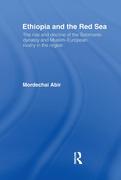
Ethiopia and the Red Sea
Ethiopia and the Red Sea - The Rise and Decline of the Solomonic Dynasty and Muslim European Rivalry in the Region: ab 47.99 €- Shop: ebook.de
- Price: 47.99 EUR excl. shipping
-
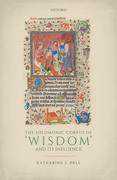
The Solomonic Corpus of 'Wisdom' and Its Influence
The Solomonic Corpus of 'Wisdom' and Its Influence: ab 77.49 €- Shop: ebook.de
- Price: 77.49 EUR excl. shipping