43 Results for : oppressor
-

What Gandhi Says: About Nonviolence, Resistance and Courage , Hörbuch, Digital, ungekürzt, 125min
The Occupy movement and the protests that inspired it have focused new attention on the work of Mahatma Gandhi, who set out principles of nonviolent resistance during the struggle for Indian Independence, principles that found their echo in Tahrir Square, Puerta del Sol and Zuccotti Park some half a century later. If there has been widespread recognition of Gandhi's role in developing the tactics underpinning the revolutionary upsurges of the past year, few have stopped to examine what Gandhi actually said about the relationship between nonviolence, resistance and courage. Step forward Norman Finkelstein, who, drawing on extensive readings of Gandhi's copious oeuvre and intensive reflection on the way that progress might be made in the seemingly intractable impasse of the Middle East, here sets out in clear and concise language the basic principles of Gandhi's approach. There is much that will surprise in these pages: Gandhi was not a pacifist; he believed in the right of those being attacked to strike back and regarded inaction as a result of cowardice to be a greater sin than even the most ill-considered aggression. Gandhi's calls for the sacrifice of lives in order to shame the oppressor into concessions can easily seem chilling and ruthless. But Gandhi's insistence that, in the end, peaceful resistance will always be less costly in human lives than armed opposition, and his understanding that the role of a protest movement is not primarily to persuade people of something new, but rather to get them to act on behalf of what they already accept as right - these principles have profound resonance in both the Israel-Palestine conflict and the wider movement for justice and democracy that began to sweep the world in 2011. ungekürzt. Language: English. Narrator: Kevin Free. Audio sample: https://samples.audible.de/bk/adbl/013705/bk_adbl_013705_sample.mp3. Digital audiobook in aax.- Shop: Audible
- Price: 9.95 EUR excl. shipping
-

A South African Journey, Hörbuch, Digital, 76min
Father Michael Lapsley, an Anglican priest, went to South Africa in 1973 and immediately felt that he was caught in the duality of being either an "oppressor" or one of the "oppressed". He felt that he ceased being an individual, and became instead a "white man". He joined the African National Congress (ANC) in the struggle against apartheid because, he confesses, of his need to reclaim his humanity. A public figure of dissent against the leaders of the oppressive regime, he was informed that the South African government wanted him dead. A hostage in his own home, under 24-hour armed guard, Father Michael began to relax only after Nelson Mandela was to be freed from prison in February 1990. His guards were dismissed, and he was given assurance that the threat no longer existed. But one morning in April 1990, Father Michael became the victim of a horrendous letter-bomb attack from the South African apartheid government. The explosion destroyed both of his hands. He lost an eye, and his ear drums were shattered. Yet he spoke of his gratitude to God: "I'm so grateful that I remember. I did not go into shock or lose consciousness. I felt God's presence with me." His recovery was largely inspired by the kindness and the love that he received from many people, particularly the children who drew pictures for him. It was this kindness that enabled him, in his words, to "make the bombing a redemption". Michael Lapsley works at the Trauma Center for Victims of Violence and Torture in Cape Town, which is assisting the Commission for Truth and Reconciliation, headed by Archbishop Desmond Tutu. Recorded live on May 11, 2006, at the Brecht Forum in New York City. Language: English. Narrator: Father Michael Lapsley. Audio sample: https://samples.audible.de/rt/rfma/000048/rt_rfma_000048_sample.mp3. Digital audiobook in aax.- Shop: Audible
- Price: 9.95 EUR excl. shipping
-

The Social Currency: Why We Ought to Rethink Money | The Intersection of Bartering, Cryptocurrency, & Financing , Hörbuch, Digital, ungekürzt, 273min
While watching the popular TV show Money Heist, in Episode 8, Season 2, right at the 40-minute mark, Cecil (CJ) John, the author, had an epiphany. The premise of the show was that a “bunch of losers” broke into the Royal Mint of Spain, seizing hostages with a singular strategy: Stay in the mint for as long as they could so that they could print as many unmarked euros as possible, effectively minting their own money. The Social Currency addresses the idea that money is a social construct, and therefore so is poverty. The book showcases several communities that confronted their financial disadvantages by creating their own currency. These economic activists challenged the idea that money, by definition, had to be created and controlled by the government, locally instituting the printing of money in the process. Some examples of alternative currencies are the Brixton pound (B£) and blockchain’s bitcoin. Today, you can exchange the Brixton pound one for one against the pound sterling. In 2017, the bitcoin cryptocurrency that the anonymous Satoshi Nakomoto reserved for himself, was worth $22 billion. It is time for the community to be actively involved in the process of minting money. Money is a social construct and a medium for the exchange of value, and the essence of morality is the transaction. CJ traces the history of trade from bartering, standardized metal coins, through to government-controlled fiat, and today’s cryptocurrency. Interestingly, today we refer to blockchain as the Internet of value. The dominant morality in any given moment arises from an oscillation of power between what the German philosopher Friedrich Nietzsche referred to as the Masters and the Herd or the oppressor vs. the oppressed. Absolute power corrupts, and it is time to challenge the idea that government-controlled money, and the “Masters” that support it, are suitable for the wider society. It’s time to confront the notion that money in its c ungekürzt. Language: English. Narrator: Carl Hughes. Audio sample: https://samples.audible.de/bk/acx0/224050/bk_acx0_224050_sample.mp3. Digital audiobook in aax.- Shop: Audible
- Price: 9.95 EUR excl. shipping
-

The Roots of Obama’s Rage , Hörbuch, Digital, ungekürzt, 478min
Critics of President Obama have attacked him as a socialist, an African American radical, and a big-government liberal. But somehow the critics have failed to understand what’s truly driving Barack Obama. Now best-selling author Dinesh D’Souza throws out these misplaced attacks in his new book, The Roots of Obama’s Rage. D’Souza explains that the reason Obama appears to be working to destroy America from within is found, as Obama himself admits, in The Dreams of My Father: a deeply hostile anticolonialism. Instilled in him by his father, this worldview has led President Obama to resent America and everything we stand for. Viewing Obama through this anticolonialism prism and drawing evidence from President Obama’s own life and writings, D’Souza masterfully shows how Obama is working to weaken and punish America here and abroad. From enacting crippling financial reforms to setting artificial withdrawal dates in Iraq and Afghanistan, Obama is trying to muzzle the capitalism which he sees as exploiting the weak. Our president, argues D’Souza, is more concerned with being labeled as America the Oppressor than winning the war on terror. The Roots of Obama’s Rage reveals Obama for who he really is: a man driven by the anticolonial ideology of his father and the first American president to actually seek to reduce America’s strength, influence, and standard of living. Controversial and compelling, The Roots of Obama’s Rage is poised to be the one book that truly defines Obama and his presidency. Dinesh D’Souza is the best-selling author of several books, including What’s So Great about America, What’s So Great about Christianity, and Life after Death. He has been a White House policy analyst, a fellow at the American Enterprise Institute, and a fellow at the Hoover Institution at Stanford University. He lives in Rancho Santa Fe, California, with his wife Dixie and their daughter Danielle. ungekürzt. Language: English. Narrator: Sean Runnette. Audio sample: https://samples.audible.de/bk/blak/003976/bk_blak_003976_sample.mp3. Digital audiobook in aax.- Shop: Audible
- Price: 9.95 EUR excl. shipping
-

Bloody Mary: The Life and Legacy of England's Most Notorious Queen , Hörbuch, Digital, ungekürzt, 87min
When I am dead and opened, you shall find 'Calais' lying in my heart. (Mary I) Queen Mary I ruled England and its conquered territories in Wales and Ireland for only five years, from 1553 to 1558, yet she has been remembered for nearly 500 years as Bloody Mary, the Catholic oppressor of a Protestant country. The truth, as usual, is more complicated than the myth. The oldest surviving child of King Henry VIII, she grew up in an era of religious and political turmoil, both in England and abroad, and though united in its Christianity, the continent was divided in how it approached that faith. A growing wave of protest and dissent had been met with brutal suppression in the 15th century, only to emerge like a phoenix from the flames in the form of Protestantism. With religious faith and political practice deeply intertwined, countries were being torn apart in a growing conflict between Catholics and Protestants. Mary's life was shaped by her experience of this, and by the twisted family politics of her father, Henry VIII. Henry VIII's lone mail heir, his young son Edward, was a strong Protestant, but a sickly teen. As it became clear that he would not survive to adulthood, Edward did not want his crown to pass to Mary, a zealous Catholic, whose brutal reign would include 280 "heretics" being burned at the stake during the Marian persecutions. However, Edward could see no constitutional, or indeed nonarbitrary, way to pass over Mary and choose his younger sister, Elizabeth. Hence, in his typical schoolboy penmanship, Edward's will attempted to override the Succession to the Crown Act of 1543 (advocated by his father and passed by Parliament), bar both Mary and Elizabeth from the succession, and declare Lady Jane Grey, the granddaughter of Henry VIII's sister, as his heir. ungekürzt. Language: English. Narrator: Patte Shaughnessy. Audio sample: https://samples.audible.de/bk/acx0/036543/bk_acx0_036543_sample.mp3. Digital audiobook in aax.- Shop: Audible
- Price: 9.95 EUR excl. shipping
-

Mandela's Way: Fifteen Lessons on Life, Love, and Courage , Hörbuch, Digital, ungekürzt, 283min
We long for heroes and have too few. Nelson Mandela, who recently celebrated his 91st birthday, is the closest thing the world has to a secular saint. He liberated a country from a system of violent prejudice and helped unite oppressor and oppressed in a way that had never been done before. Now Richard Stengel, the editor of Time magazine, has distilled countless hours of intimate conversation with Mandela into 15 essential life lessons. For nearly three years, including the critical period when Mandela moved South Africa toward the first democratic elections in its history, Stengel collaborated with Mandela on his autobiography and traveled with him everywhere. Eating with him, watching him campaign, hearing him think out loud, Stengel came to know all the different sides of this complex man and became a cherished friend and colleague. In Mandela's Way, Stengel recounts the moments in which the grandfather of South Africa was tested and shares the wisdom he learned: why courage is more than the absence of fear, why we should keep our rivals close, why the answer is not always either/or but often both, how important it is for each of us to find something away from the world that gives us pleasure and satisfaction - our own garden. Woven into these life lessons are remarkable stories of Mandelas childhood as the protegy of a tribal king, of his early days as a freedom fighter, of the 27-year imprisonment that could not break him, and of his new and fulfilling marriage at the age of 80. This compact book is profoundly inspiring. It captures the spirit of this extraordinary manwarrior, martyr, husband, statesman, and moral leader, and spurs us to look within ourselves, reconsider the things we take for granted, and contemplate the legacy well leave behind. ungekürzt. Language: English. Narrator: Richard Stengel. Audio sample: https://samples.audible.de/bk/rand/002207/bk_rand_002207_sample.mp3. Digital audiobook in aax.- Shop: Audible
- Price: 9.95 EUR excl. shipping
-

Laconics of Cult , Hörbuch, Digital, ungekürzt, 134min
There is but one form of human enslavement more villainous and more detestable than the chains of the tyrant or the shackles of the despot, and that is the enslavement of the human mind under ecclesiastical tyranny, whose cowering and crouching victims at the crack of the priestly lash are driven from the cultivation of their own intelligence, from the custody of their own thoughts, from the guardianship of their own souls, and who, like whipt dogs, trembling and whining in abject submission at the feet of the oppressor, lick the very hand that wields the lash. I’m well aware what a thankless task it is to attack the established order of things, theological, political, or ethical, for in my long life I have often heard raised the old cry in different form: Great is Diana of the Ephesians! But I make no excuse or apology for my little book.If it shall turn a single man or woman away from the old path of Superstition, for so many centuries beaten hard and smooth by the tread of millions of poor tired human feet pressing forward in the dust of outworn ecclesiastical “props” that line the way in search of something they never can find, I will be satisfied.I owe this dear country something for my enjoyment all these years of the priceless privilege of liberty and the pursuit of happiness, and this be my gift to my countrymen, for I set no copyright upon it; it belongs to anybody who can use it, and if the clerics, theologs, sacerdotes, et id omne genus, can’t bless it - which I should hardly expect, let them use it as a remedy for torpid liver and heartily curse it.I have only one favor to ask of any man or woman who may pick it up, and that is: Listen to it through before you pass judgment upon it.I’m entitled to that much consideration, anyway. If monarchs only had the time to read the petitions tremblingly handed up to them, there would be more justice done in the world.- Ingersoll Lockwood ungekürzt. Language: English. Narrator: Henry Schrader. Audio sample: https://samples.audible.de/bk/acx0/224052/bk_acx0_224052_sample.mp3. Digital audiobook in aax.- Shop: Audible
- Price: 9.95 EUR excl. shipping
-
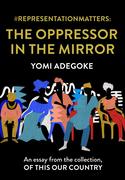
#RepresentationMatters: The Oppressor in the Mirror: An essay from the collection Of This Our Country
#RepresentationMatters: The Oppressor in the Mirror: An essay from the collection Of This Our Country: ab 2.54 €- Shop: ebook.de
- Price: 2.54 EUR excl. shipping
-
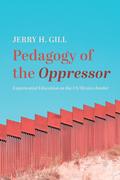
Pedagogy of the Oppressor
Pedagogy of the Oppressor - Experiential Education on the US/Mexico Border: ab 18.99 €- Shop: ebook.de
- Price: 18.99 EUR excl. shipping
-
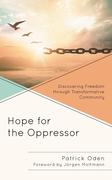
Hope for the Oppressor
Hope for the Oppressor - Discovering Freedom through Transformative Community: ab 131.99 €- Shop: ebook.de
- Price: 131.99 EUR excl. shipping