Did you mean:
Reorganize40 Results for : reorganized
-

The Cherokee Origin Narrative: Authentic Text of William Eubanks' "Red Man's Origin" with Notes (Cherokee Chapbooks, Volume 1) , Hörbuch, Digital, ungekürzt, 33min
In the world of Native Americans, oral communication takes the place of the written word in preserving their most valued “texts”. By a miracle of transmission, here is the earliest and most authenticated version of the story of the Cherokee people, from their origins in a land across the great waters to the coming of the white man. In olden times, it was recited at every Great Moon or Cherokee New Year festival so it could be learned by young people and the tribal lore perpetuated. It was set down in English in an Indian Territory newspaper by Cornsilk (the pen-name of William Eubanks) from the Cherokee language recitation of George Sahkiyah (Soggy) Sanders, a fellow Keetoowah Society priest, in 1896. We do not have anything anterior or more authoritative than Eubanks and Sanders’ Red Man’s Origin, presented here as The Cherokee Origin Narrative. Mystic and plain-spoken at the same time, it tells how the clans became seven in number, reorganized their religion in America, and struggled to maintain their “half-sphere temple of light”. You will hear in Cornsilk’s original words about the true name of the Cherokee people, the deathless Uktena serpent, divining crystals of the Urim and Thummin, “terrible Sa-ho-ni clan”, and other Cherokee storytelling subjects. The brief narrative is edited with an introduction and notes by Donald N. Yates, author of Old World Roots of the Cherokee and other titles in Cherokee history. If you own one audiobook about the Cherokee Indians, it should be this one. Second edition (August 15, 2017), with new title and revised. Replaces Red Man's Origin (2013). ungekürzt. Language: English. Narrator: Jacob Phillips. Audio sample: https://samples.audible.de/bk/acx0/126991/bk_acx0_126991_sample.mp3. Digital audiobook in aax.- Shop: Audible
- Price: 9.95 EUR excl. shipping
-

Effective Perl Programming (eBook, ePUB)
The Classic Guide to Solving Real-World Problems with Perl-Now Fully Updated for Today's Best Idioms! For years, experienced programmers have relied on Effective Perl Programming to discover better ways to solve problems with perl. Now, in this long-awaited second edition, three renowned Perl programmers bring together today's best idioms, techniques, and examples: everything you need to write more powerful, fluent, expressive, and succinct code with Perl. Nearly twice the size of the first edition, Effective Perl Programming, Second Edition, offers everything from rules of thumb to avoid common pitfalls to the latest wisdom for using Perl modules. You won't just learn the right ways to use Perl: You'll learn why these approaches work so well. New coverage in this edition includes Reorganized and expanded material spanning twelve years of Perl evolution Eight new chapters on CPAN, databases, distributions, files and filehandles, production Perl, testing, Unicode, and warnings Updates for Perl 5.12, the latest version of Perl Systematically updated examples reflecting today's best idioms You'll learn how to work with strings, numbers, lists, arrays, strictures, namespaces, regular expressions, subroutines, references, distributions, inline code, warnings, Perl::Tidy, data munging, Perl one-liners, and a whole lot more. Every technique is organized in the same Items format that helped make the first edition so convenient and popular.- Shop: buecher
- Price: 15.95 EUR excl. shipping
-

The Art of Clear Thinking: Discover How to Improve Your Mental Health, Feel Better and Increase Your Focus by Unlocking Your Brain's Healing Potential , Hörbuch, Digital, ungekürzt, 206min
Why do we act so often against our own interests? Are you tired of living in a state of mental confusion? Are you crushed by friends, by work, by society and can't get your ideas reorganized to focus on what you really care about?We’ve all felt anxious, sad, stressed, angry, or hopeless. We are humans, not robots. It’s perfectly normal. It is how you respond to these challenges that will make all the difference in how you feel. Unfortunately, many people turn to self-medicating behaviors, such as overeating, drugs, or alcohol.The special thing about this audiobook is that it will really help you to take control of your thoughts, actions, impulses, and fears. How do I know it? Because this manual outlines several methods for clearing your mind such as meditation, exercise, creativity, and music; it goes into the benefits of each, backed by research and the scientific method while stressing self-awareness and self-worth the most.Start today with The Art of Clear Thinking:Important technique for not getting bored and losing concentrationSome smart ways to boost your brain powerFive rituals to help your body stay in peak conditionHow some words can change our actions and thoughtsCommon mistakes our brains make every day, and how you can prevent themHow become a pro at dealing with stress and better at solving problemsQuick technique to help you practice meditation on your own, whenever you wantHow can this extraordinary approach increase your power of self-controlQuick process that explains ways to adapt well to changes and destroy anxietyThe Art of Clear Thinking offers you the practical methods you need to be more insightful, and think more critically and wisely.Optimize your brain and your life. Listen to harness your mental potential and stop acting against your own interests. ungekürzt. Language: English. Narrator: Austin R. Stoler. Audio sample: https://samples.audible.de/bk/acx0/162200/bk_acx0_162200_sample.mp3. Digital audiobook in aax.- Shop: Audible
- Price: 9.95 EUR excl. shipping
-

Cabal!: The Plot Against General Washington , Hörbuch, Digital, ungekürzt, 654min
In the spring of 1778, General George Washington wrote to his friend Landon Carter about a rumored “disposition in the Northern officers to see me superseded in my command”. This was as candid a statement as the general ever made about the so-called “Conway Cabal” of patriot officers and politicians critical of his leadership. Most early historians of the Revolution took the threat to Washington seriously, but by the mid-20th century, interpretations had reversed, with the plot - if one existed - posing no real danger to the commander-in-chief. Yet, as historian Mark Edward Lender reveals in his compelling Cabal!: The Plot Against General Washington, clues found in original new research provide a more comprehensive understanding of the personalities and political maneuverings of those involved in the cabal and the real nature of the challenge to Washington.The threat to Washington’s command was a gradual administrative attempt by the Board of War and political allies to take over the war effort. Reorganized in late 1777 under the leadership of Mifflin, with Gates assuming the board presidency in January 1778, the Board of War sought authority to determine military policy and strategic goals, training, organizational, personnel, and logistical functions, and even the assignment of theater commanders. Had they succeeded, Washington’s title of commander-in-chief would have been utterly hollow. The cabal tested Washington as few other things did during the war and, perhaps, tempered him into the man we remember today. Washington adroitly navigated the challenges to his leadership, meeting and defeating every attempt to curtail his authority. His response revealed a leadership style that saw him safely through the war and gave him overwhelming support from his countrymen to become their first president.The book is published by Westholme Publishing. The audiobook is published by University Press Audiobooks. ungekürzt. Language: English. Narrator: Bob Neufeld. Audio sample: https://samples.audible.de/bk/acx0/180785/bk_acx0_180785_sample.mp3. Digital audiobook in aax.- Shop: Audible
- Price: 9.95 EUR excl. shipping
-

The Best of the Gallup Management Journal 2001-2007 , Hörbuch, Digital, ungekürzt, 638min
Since 2001, the Gallup Management Journal has provided leaders with essential insights into managing the human side of their businesses - their employees and customers. This book features the highlights of the first seven years of the GMJ: more than 50 thought-provoking articles with actionable ideas, grounded in decades of Gallup management research. The Best of the Gallup Management Journal 2001-2007 could not be more relevant today, as executives continue to struggle with the transition into a 21st century global economy. Many leaders have reengineered and reorganized their companies numerous times. But what remains is the biggest business challenge of all: improving and perfecting relationships with customers and with the employees who engage them. More than anything, executives and managers need quantifiable, measurable strategies for making the "intangible" side of their businesses as productive and profitable as it can be. For years, "hard-headed" business leaders and gurus have said that it's impossible to measure these intangibles. The GMJ argues that they're wrong, and this book offers proof. Drawing on interviews with millions of employees and customers worldwide, the articles and interviews in these minutes cover topics such as the best way to get meaningful employee feedback, why customer satisfaction is the wrong measure, the 12 elements of great managing, why most advertising doesn't work, and the impact of positive leadership. A range of voices from within and outside of Gallup is included in these minutes. A Ritz-Carlton executive tells how his company is reinventing its world-class brand, while a leader at Ann Taylor describes how the retailer invests in talent. Nobel Prize winner Daniel Kahneman probes how customers think, while one of the inventors of the Internet, Vinton Cerf, speculates on the future of his creation. The full copyright information can be found below: © 2007 ungekürzt. Language: English. Narrator: Tom Parks, Amy McFadden, Scott Merriman. Audio sample: https://samples.audible.de/bk/brll/008495/bk_brll_008495_sample.mp3. Digital audiobook in aax.- Shop: Audible
- Price: 9.95 EUR excl. shipping
-

C++ Primer
While maintaining the authori Product Description Bestselling Programming Tutorial and Reference Completely Rewritten for the New C++11 Standard Fully updated and recast for the newly released C++11 standard, this authoritative and comprehensive introduction to C++ will help you to learn the language fast, and to use it in modern, highly effective ways. Highlighting today’s best practices, the authors show how to use both the core language and its standard library to write efficient, readable, and powerful code. C++ Primer, Fifth Edition, introduces the C++ standard library from the outset, drawing on its common functions and facilities to help you write useful programs without first having to master every language detail. The book’s many examples have been revised to use the new language features and demonstrate how to make the best use of them. This book is a proven tutorial for those new to C++, an authoritative discussion of core C++ concepts and techniques, and a valuable resource for experienced programmers, especially those eager to see C++11 enhancements illuminated. Start Fast and Achieve More Learn how to use the new C++11 language features and the standard library to build robust programs quickly, and get comfortable with high-level programming Learn through examples that illuminate today’s best coding styles and program design techniques Understand the “rationale behind the rules”: why C++11 works as it does Use the extensive crossreferences to help you connect related concepts and insights Benefit from up-to-date learning aids and exercises that emphasize key points, help you to avoid pitfalls, promote good practices, and reinforce what you’ve learned Access the source code for the extended examples from informit.com/title/0321714113 C++ Primer, Fifth Edition, features an enhanced, layflat binding, which allows the book to stay open more easily when placed on a flat surface. This special binding method—notable by a small space inside the spine—also increases durability. Features + Benefits A best-seller completely revised and rewritten for the new C++ 2011 standard A favorite choice for a first C++ book--greatly improved and updated for modern C++ programming. Reorganized to better address the novice audience, making it more approachable for non-C programmers. Features many new examples that are less advanced and more accessible to novices as well as experienced programmers--folks who already use C++ need this book too. Preface xxiii Chapter 1: Getting Started 1 1.1 Writing a Simple C++ Program 2 1.2 A First Look at Input/Output 5 1.3 A Word About Comments 9 1.4 Flow of Control 11 1.5 Introducing Classes 19 1.6 The Bookstore Program 24 Chapter Summary 26 Defined Terms 26 Part I: The Basics 29 Chapter 2: Variables and Basic Types 31 2.1 Primitive Built-in Types 32 2.2 Variables 41 2.3 Compound Types 50 2.4 const Qualifier 59 2.5 Dealing with Types 67 2.6 Defining Our Own Data Structures 72 Chapter Summary 78 Defined Terms 78 Chapter 3: Strings, Vectors, and Arrays 81 3.1 Namespace using Declarations 82 3.2 Library string Type 84 3.3 Library vector Type 96 3.4 Introducing Iterators 106 3.5 Arrays 113 3.6 Multidimensional Arrays 125 Chapter Summary 131 Defined Terms 131 Chapter 4: Expressions 133 4.1 Fundamentals 134 4.2 Arithmetic Operators 139 4.3 Logical and Relational Operators 141 4.4 Assignment Operators 144 4.5 Increment and Decrement Operators 147 4.6 The Member Access Operators 150 4.7 The Conditional Operator 151 4.8 The Bitwise Operators 152 4.9 The sizeof Operator 156 4.10 Comma Operator 157 4.11 Type Conversions 159 4.12 Operator Precedence Table 166 Chapter Summary 168 Defined Terms 168 Chapter 5: Statements 171 5.1 Simple Statements 172 5.2 Statement Scope 174 5.3 Conditional Statements 174 5.4 Iterative Statements 183 5.5 Jump Statements 190 5.6 try Blocks and Exception Handling 193 Chapter Summary 199 Defined Terms 199 Chapter 6: Functions 201 6.1 Function Basics 202 6.2 Argument Passing 208 6.3 Return Types and the return Statement 222 6.4 Overloaded Functions 230 6.5 Features for Specialized Uses 236 6.6 Function Matching 242 6.7 Pointers to Functions 247 Chapter Summary 251 Defined Terms 251 Chapter 7: Classes 253 7.1 Defining Abstract Data Types 254 7.2 Access Control and Encapsulation 268 7.3 Additional Class Features 271 7.4 Class Scope 282 7.5 Constructors Revisited 288 7.6 static Class Members 300 Chapter Summary 305 Defined Terms 305 Part II: The C++ Library 307 Chapter 8: The IO Library 309 8.1 The IO Classes 310 8.2 File Input and Output 316 8.3 string Streams 321 Chapter Summary 324 Defined Terms 324 Chapter 9: Sequential Containers 325 9.1 Overview of the Sequential Containers 326 9.2 Container Library Overview 328 9.3 Sequential Container Operations 341 9.4 How a vector Grows 355 9.5 Additional string Operations 360 9.6 Container Adaptors 368 Chapter Summary 372 Defined Terms 372 Chapter 10: Generic Algorithms 375 10.1 Overview 376 10.2 A First Look at the Algorithms 378 10.3 Customizing Operations 385 10.4 Revisiting Iterators 401 10.5 Structure of Generic Algorithms 410 10.6 Container-Specific Algorithms 415 Chapter Summary 417 Defined Terms 417 Chapter 11: Associative Containers 419 11.1 Using an Associative Container 420 11.2 Overview of the Associative Containers 423 11.3 Operations on Associative Containers 428 11.4 The Unordered Containers 443 Chapter Summary 447 Defined Terms 447 Chapter 12: Dynamic Memory 449 12.1 Dynamic Memory and Smart Pointers 450 12.2 Dynamic Arrays 476 12.3 Using the Library: A Text-Query Program 484 Chapter Summary 491 Defined Terms 491 Part III: Tools for Class Authors 493 Chapter 13: Copy Control 495 13.1 Copy, Assign, and Destroy 496 13.2 Copy Control and Resource Management 510 13.3 Swap 516 13.4 A Copy-Control Example 519 13.5 Classes that Manage Dynamic Memory 524 13.6 Moving Objects 531 Chapter Summary 549 Defined Terms 549 Chapter 14: Overloaded Operations and Conversions 551 14.1 Basic Concepts 552 14.2 Input and Output Operators 556 14.3 Arithmetic and Relational Operators 560 14.4 Assignment Operators 563 14.5 Subscript Operator 564 14.6 Increment and Decrement Operators 566 14.7 Member Access Operators 569 14.8 Function-Call Operator 571 14.9 Overloading, Conversions, and Operators 579 Chapter Summary 590 Defined Terms 590 Chapter 15: Object-Oriented Programming 591 15.1 OOP: An Overview 592 15.2 Defining Base and Derived Classes 594 15.3 Virtual Functions 603 15.4 Abstract Base Classes 608 15.5 Access Control and Inheritance 511 15.6 Class Scope under Inheritance 617 15.7 Constructors and Copy Control 622 15.8 Containers and Inheritance 630 15.9 Text Queries Revisited 634 Chapter Summary 649 Defined Terms 649 Chapter 16: Templates and Generic Programming 651 16.1 Defining a Template 652 16.2 Template Argument Deduction 678 16.3 Overloading and Templates 694 16.4 Variadic Templates 699 16.5 Template Specializations 706 Chapter Summary 713 Defined Terms 713 Part IV: Advanced Topics 715 Chapter 17: Specialized Library Facilities 717 17.1 The tuple Type 718 17.2 The bitset Type 723 17.3 Regular Expressions 728 17.4 Random Numbers 745 17.5 The IO Library Revisited 752 Chapter Summary 769 Defined Terms 769 Chapter 18: Tools for Large Programs 771 18.1 Exception Handling 772 18.2 Namespaces 785 18.3 Multiple and Virtual Inheritance 802 Chapter Summary 816 Defined Terms 816 Chapter 19: Specialized Tools and Techniques 819While maintaining the authority and quality of a book that has sold more than 500,000 copies, this Fifth edition is not your father's C++ Primer. It has been completely revised and rewritten to conform to today's C++ usage. and to cover the recently released C++ 2011 standard. Students new to C++ will find a clear and practically organized introduction to the language enhanced by numerous pedagogical aids. Students returning to C++ will be able to update their knowledge with new material on using C++ libraries and programming styles. Access the source code for the extended examples from informit.com/title/0321714113- Shop: buecher
- Price: 36.99 EUR excl. shipping
-

Modern Operating Systems: Global Edition
Modern Operating Systems, Fourth Edition, is intended for introductory courses in Operating Systems in Computer Science, Computer Engineering, and Electrical Engineering programs. The widely anticipated revision of this worldwide best-seller incorporates the latest developments in operating systems (OS) technologies. The Fourth Edition includes up-to-date materials on relevant OS. Tanenbaum also provides information on current research based on his experience as an operating systems researcher. Modern Operating Systems, Third Edition was the recipient of the 2010 McGuffey Longevity Award. The McGuffey Longevity Award recognizes textbooks whose excellence has been demonstrated over time. http://taaonline.net/index.html Teaching and Learning Experience This program will provide a better teaching and learning experience–for you and your students. It will help: Provide Practical Detail on the Big Picture Concepts: A clear and entertaining writing style outlines the concepts every OS designer needs to master. Keep Your Course Current: This edition includes information on the latest OS technologies and developments Enhance Learning with Student and Instructor Resources: Students will gain hands-on experience using the simulation exercises and lab experiments. Features + Benefits Provide Practical Detail on the Big Picture Concepts A clear and entertaining writing style outlines the concepts every OS designer needs to master. In-depth topic coverage includes processes, threads, memory management, file systems, I/O, deadlocks, interface design, multimedia, performance tradeoffs, and the newest trends in OS design. Multimedia file systems are covered–an important topic that most books miss. The chapter on Multimedia Operating Systems has been moved to the Web, primarily to make room for new material and keep the book from growing to a completely unmanageable size. A thorough treatment of computer security includes viruses, worms, malware and other digital pests. This chapter far exceeds anything written in any other book. It also discusses ways to combat them. Keep Your Course Current Coverage of multiprocessors, multicomputers, virtual machines, and distributed systems reflects that the field is rapidly moving from an era of single-processor systems to multicore systems, multiprocessors, and distributed systems. Case studies of popular operating systems: UNIX, Linux, Windows 8, and Android NEW: Chapter 10, on UNIX, Linux, and Android is a revision of the old Chapter 10. The focus is clearly on Linux now, with a great deal of new material about Android, which was not in the previous edition. NEW: Chapter 11 in the third edition was on Windows Vista. A chapter on Windows 8, specifically Windows 8.1, has replaced that. It brings the treatment of Windows completely up to date. NEW and UPDATED: Chapters 2—6 have been updated, with older material removed and some new material added. Chapter 2: Added information on the futex synchronization primitive, and a section about how to avoid locking altogether with Read-Copy-Update. Chapter 3: More focus on modern hardware and less emphasis on segmentation and Multics. Chapter 4: CD-Roms are removed, as they are no longer very common, and replaced with more modern solutions (like flash drives). Also, we added RAID level 6 to the section on RAID. Chapter 5: Older devices like CRT and CD-ROMs have been removed, while new technology, like touch screens have been added. The sections on current research in these chapters have been rewritten from scratch. New problems and programming exercises have been added. NEW: Chapter 7 is completely new. It covers the important topics of virtualization and the cloud. NEW and UPDATED: Chapter 8 is an updated version of the previous material on multiprocessor systems. There is more emphasis on multicore systems now, which have become so important in the past few years. A long section on VMware has been added. NEW and UPDATED: Chapter 9 has been heavily revised and reorganized, with considerable new material on exploiting code bugs, malware, and defenses against them. UPDATED: Chapter 12 is a revised version of Chap. 13 from the previous edition. A Research section in many chapters describes current research in the topic covered by the chapter. Enhance Learning with Student and Instructor Resources Online Exercises provide hands-on experience with building as well as analyzing the performance of OS. In particular, these exercises have been designed to provide experience with analyzing the resource consumptions in Windows and Linux. Simulation Exercises are designed to provide experience with building some key components of an OS, including process scheduling, main memory allocation, paging algorithms and virtual memory, and file systems. Student Tools and Lab Experiments allow students to download the tools and run the experiments to gain deeper knowledge of the subject. Password-Protected Instructor Resources (Select the Resources Tab to View Downloadable Files): Power Point Lecture Slides Figures in both .jpeg and .eps file format Solutions to Exercises CHAPTER 1 "INTRODUCTION"1.1 WHAT IS AN OPERATING SYSTEM? 3 1.1.1 The Operating System as an Extended Machine 4 1.1.2 The Operating System as a Resource Manager 51.2 HISTORY OF OPERATING SYSTEMS 6 1.2.1 The First Generation (1945-55): Vacuum Tubes 7 1.2.2 The Second Generation (1955-65): Transistors and Batch Systems 8 1.2.3 The Third Generation (1965-1980): ICs and Multiprogramming 9 1.2.4 The Fourth Generation (1980-Present): Personal Computers 15 1.2.5 The Fifth Generation (1990-Present): Mobile Computers 191.3 COMPUTER HARDWARE REVIEW 20 1.3.1 Processors 21 1.3.2 Memory 24 1.3.3 Disks 27 1.3.4 I/O Devices 28 1.3.5 Buses 32 1.3.6 Booting the Computer 341.4 THE OPERATING SYSTEM ZOO 35 1.4.1 Mainframe Operating Systems 35 1.4.2 Server Operating Systems 35 1.4.3 Multiprocessor Operating Systems 36 1.4.4 Personal Computer Operating Systems 36 1.4.5 Handheld Computer Operating Systems 36 1.4.6 Embedded Operating Systems. 37 1.4.7 Sensor-Node Operating Systems 37 1.4.8 Real-Time Operating Systems 37 1.4.9 Smart Card Operating Systems 381.5 OPERATING SYSTEM CONCEPTS 38 1.5.1 Processes 39 1.5.2 Address Spaces 41 1.5.3 Files 41 1.5.4 Input/Output 45 1.5.5 Protection 45 1.5.6 The Shell 45 1.5.7 Ontogeny Recapitulates Phylogeny 471.6 SYSTEM CALLS 50 1.6.1 System Calls for Process Management 53 1.6.2 System Calls for File Management 56 1.6.3 System Calls for Directory Management 57 1.6.4 Miscellaneous System Calls 59 1.6.5 The Windows Win32 API 601.7 OPERATING SYSTEM STRUCTURE 62 1.7.1 Monolithic Systems 63 1.7.2 Layered Systems 64 1.7.3 Microkernels 65 1.7.4 Client-Server Model 68 1.7.5 Virtual Machines 69 1.7.6 Exokernels 731.8 THE WORLD ACCORDING TO C 73 1.8.1 The C Language 73 1.8.2 Header Files 74 1.8.3 Large Programming Projects 75 1.8.4 The Model of Run Time 761.9 RESEARCH ON OPERATING SYSTEMS 771.10 OUTLINE OF THE REST OF THIS BOOK 781.11 METRIC UNITS 791.12 SUMMARY 80CHAPTER 2 "PROCESSES AND THREADS"2.1 PROCESSES 85 2.1.1 The Process Model 86 2.1.2 Process Creation 88 2.1.3 Process Termination 90 2.1.4 Process Hierarchies 91 2.1.5 Process States 92 2.1.6 Implementation of Processes 94 2.1.7 Modeling Multiprogramming 952.2 THREADS 97 2.2.1 Thread Usage 97 2.2.2 The Classical Thread Model 102 2.2.3 POSIX Threads 106 2.2.4 Implementing Threads in User Space 108 2.2.5 Implementing Threads in the Kernel 111 2.2.6 Hybrid Implementations 112 2.2.7 Scheduler Activations 113 2.2.8 Pop-Up Threads 114 2.2.9 Making Single-Threaded Code Multithreaded 1162.3 INTERPROCESS COMMUNICATION 119 2.3.1 Race Conditions 119 2.3.2 Critical Regions 121 2.3.3 Mutual Exclusion with Busy Waiting 122 2.3.4 Sleep and Wakeup 127 2.3.5 Semaphores 130 2.3.6 Mutexes 132 2.3.7 Monitors 137 2.3.8 Message Passing 144 2.3.9 Barriers 146 2.3.10 Avoiding Locks: Read-Copy-Update 1482.4 SCHEDULING 149 2.4.1 Introduction to Scheduling 150 2.4.2 Scheduling in Batch Systems 156 2.4.3 Scheduling in Interactive Systems 158 2.4.4 Scheduling in Real-Time Systems 164 2.4.5 Policy Versus Mechanism 165 2.4.6 Thread Scheduling 1662.5 CLASSICAL IPC PROBLEMS 167 2.5.1 The Dining Philosophers Problem 167 2.5.2 The Readers and Writers Problem 1712.6 RESEARCH ON PROCESSES AND THREADS 1722.7 SUMMARY 173CHAPTER 3 "MEMORY MANAGEMENT"3.1 NO MEMORY ABSTRACTION 1823.2 A MEMORY ABSTRACTION: ADDRESS SPACES 185 3.2.1 The Notion of an Address Space 186 3.2.2 Swapping 187 3.2.3 Managing Free Memory 190Modern Operating Systems, Fourth Edition, is intended for introductory courses in Operating Systems in Computer Science, Computer Engineering, and Electrical Engineering programs.The widely anticipated revision of this worldwide best-seller incorporates the latest developments in operating systems (OS) technologies. The Fourth Edition includes up-to-date materials on relevant OS. Tanenbaum also provides information on current research based on his experience as an operating systems researcher.Modern Operating Systems, Third Edition was the recipient of the 2010 McGuffey Longevity Award. The McGuffey Longevity Award recognizes textbooks whose excellence has been demonstrated over time. http://taaonline.net/index.htmlTeaching and Learning ExperienceThis program will provide a better teaching and learning experience-for you and your students. It will help: Provide Practical Detail on the Big Picture Concepts: A clear and entertaining writing style outlines the concepts every OS designer needs to master. Keep Your Course Current: This edition includes information on the latest OS technologies and developments Enhance Learning with Student and Instructor Resources: Students will gain hands-on experience using the simulation exercises and lab experiments.- Shop: buecher
- Price: 56.99 EUR excl. shipping
-
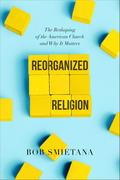
Reorganized Religion
Reorganized Religion - The Reshaping of the American Church and Why it Matters: ab 10.99 €- Shop: ebook.de
- Price: 10.99 EUR excl. shipping
-
Women & Percussion Live!
DrumHeart is the performance ensemble to the Women's Drum Center, a nonprofit organization that offers opportunities for women and girls to have fun with percussion through classes, workshops, and the drumming ensemble experience. By sharing the joys of percussion, we hope to bring joy, energy, connection, empowerment, and healing to the world. DrumHeart brings a festival beat to many community events and concerts throughout the year. The ensemble has a strong interest in world percussion music, including music with Brazilian, Caribbean, Jamaican, and African roots. About the Women's Drum Center: Share our drums Share our space Share our spirit Explore your dreams of drumming whatever they may be Our Vision: 'The Women's Drum Center envisions a world in which women drummers- as performers, teachers, students- are a driving force for promoting joy, inclusiveness, respect, and unity in community.' Our Mission: The mission of the Women's Drum Center is to provide opportunities for women and girls to learn, teach, and play percussion together and to energize the community at large through our performing. Our History: In 1989, Colleen Haas founded Drumming Our Fill, a percussion studio committed to providing a wide range of percussion experiences for women. Here, women could find artistic and emotional safety to pursue drumming--an art form where society marginalized women. Haas also started Drumheart, an ensemble of advanced Drumming Our Fill students. In 1996 Haas relocated to Winona, Minnesota. The members of DrumHeart reorganized Drumming Our Fill into the non-profit organization DrumHeart Studio, Inc. In 2001 DrumHeart Studio changed it's name to the Women's Drum Center (WDC). The center continues to provide a home base for DrumHeart as well as classes and events for women and girls in our community. At the Women's Drum Center we emphasize: -the joy of drumming rather than drum competitions -an encouraging environment for beginners to explore drumming -drum and percussion technique training -learning from women drum instructors -performing compositions arranged or written by women -opportunity to grow both in drum skills and personally -the communal nature of drumming -world music For over 10 years, Women's Drum Center has inspired women, girls, and our entire community through percussion workshops at our studio, outreach programs to community centers, and the fabulous drumming energy of our performance ensemble, DrumHeart. We've spurred on runners and walkers at events such as Race for the Cure, the Twin Cities AIDS Walk, and Headwaters Walk for Justice. Please support our healing, fun-filled mission! * Donate to our general fund to support all of the various programs of the Women's Drum Center. * We keep our class rates as low as possible, but we still know that cost can be a barrier. Support our Scholarship Fund, earmarked to help low-income women and girls participate in our workshops. * PASS THE WORD - Advertisements, fliers, and other ways of advertisement are rarely the ultimate motivators. It is usually people like you, telling friends about what we do, that bring our students to us. Word of mouth is our greatest friend. About DrumHeart: Mission: DrumHeart provides an opportunity for women to experience ensemble performance. Value: We value the collective, cooperative nature of drumming and strive to bring the joy and spirit of rhythms to ourselves, to other women, and to our whole community. Goal: We provide joy, energy, enthusiasm, and spirit to community events and functions. The Ensemble: DrumHeart is both a class and a performing group. To participate, a drummer must audition and receive approval from the Music Director. Email the Music Director There is a tuition fee for each of the three 12-week sessions. The fee pays for practice space, use of drums, instruction, commissioned and original music pieces, and ensemble uniforms. We develop musically in a caring, fun, supportive, respectful, and cooperative environment. We place a high value on each woman's unique contribution to the ensemble. Our Leadership: DrumHeart is taught by professional drummers. We support women by hiring them as directors and teachers as often as possible. (meet our teachers) We support women composers- whether they are professional musicians or fellow DrumHeart members- by performing their original or arranged works. Our Music: We play festival music with Brazilian, Caribbean, Jamaican, and African roots. We maintain, as best we can, a connection to the cultural context for our music and instruments. We regularly bring our music to several annual events: May Day Parade and Festival Melpomene 5K Susan G. Komen Twin Cities Race for the Cure® Minnesota AIDS Walk Ashley Rukes GLBT Pride Parade Minnesota State Fair Mall Parade.- Shop: odax
- Price: 24.39 EUR excl. shipping
-
After War Gundam X: Collection 2
The remnants of the old government have reorganized to form the vicious New United Nations Earth. The new government seeks complete control of the planet, in order to reignite the war against the Space Revolutionary Army. One side sees Newtypes as the future of humanity, while the other sees them as weapons threatening it's very existence and with the Frost Brothers manipulating the situation, the fighting is quickly spiraling out of control. Hoping to stop the war before it starts, Garrod, Tiffa, and the crew of the Freeden continue their search for Newtypes. If they bring enough Newtypes together, will they find a path to peace? Available in North America in high definition and on Blu-ray for the very first time! Contains episodes 20-39, Bonus Features: Clean Openings 3-5, Clean Ending 3, Audio: Japanese 2.0, English Subtitles, Video: 1080p 4x3 original aspect ratio.- Shop: odax
- Price: 56.86 EUR excl. shipping

