338 Results for : pointers
-

Game Development Projects with Unreal Engine (eBook, ePUB)
Learn the tools and techniques of game design using a project-based approach with Unreal Engine 4 and C++Key FeaturesKickstart your career or dive into a new hobby by exploring game design with UE4 and C++Learn the techniques needed to prototype and develop your own ideasReinforce your skills with project-based learning by building a series of games from scratchBook DescriptionGame development can be both a creatively fulfilling hobby and a full-time career path. It's also an exciting way to improve your C++ skills and apply them in engaging and challenging projects.Game Development Projects with Unreal Engine starts with the basic skills you'll need to get started as a game developer. The fundamentals of game design will be explained clearly and demonstrated practically with realistic exercises. You'll then apply what you've learned with challenging activities.The book starts with an introduction to the Unreal Editor and key concepts such as actors, blueprints, animations, inheritance, and player input. You'll then move on to the first of three projects: building a dodgeball game. In this project, you'll explore line traces, collisions, projectiles, user interface, and sound effects, combining these concepts to showcase your new skills.You'll then move on to the second project; a side-scroller game, where you'll implement concepts including animation blending, enemy AI, spawning objects, and collectibles. The final project is an FPS game, where you will cover the key concepts behind creating a multiplayer environment.By the end of this Unreal Engine 4 game development book, you'll have the confidence and knowledge to get started on your own creative UE4 projects and bring your ideas to life.What you will learnCreate a fully-functional third-person character and enemiesBuild navigation with keyboard, mouse, gamepad, and touch controlsProgram logic and game mechanics with collision and particle effectsExplore AI for games with Blackboards and Behavior TreesBuild character animations with Animation Blueprints and MontagesTest your game for mobile devices using mobile previewAdd polish to your game with visual and sound effectsMaster the fundamentals of game UI design using a heads-up displayWho this book is forThis book is suitable for anyone who wants to get started using UE4 for game development. It will also be useful for anyone who has used Unreal Engine before and wants to consolidate, improve and apply their skills. To grasp the concepts explained in this book better, you must have prior knowledge of the basics of C++ and understand variables, functions, classes, polymorphism, and pointers. For full compatibility with the IDE used in this book, a Windows system is recommended.- Shop: buecher
- Price: 21.95 EUR excl. shipping
-

Apartness and Uniformity
This book presents a theory of apartness encompassing both point-set topology and the theory of uniform spaces. The first book on the apartness approach to constructive topology, it is a valuable addition to the literature on topology in computer science.The theory presented in this book is developed constructively, is based on a few axioms encapsulating the notion of objects (points and sets) being apart, and encompasses both point-set topology and the theory of uniform spaces. While the classical-logic-based theory of proximity spaces provides some guidance for the theory of apartness, the notion of nearness/proximity does not embody enough algorithmic information for a deep constructive development. The use of constructive (intuitionistic) logic in this book requires much more technical ingenuity than one finds in classical proximity theory -- algorithmic information does not come cheaply -- but it often reveals distinctions that are rendered invisible by classical logic.In the first chapter the authors outline informal constructive logic and set theory, and, briefly, the basic notions and notations for metric and topological spaces. In the second they introduce axioms for a point-set apartness and then explore some of the consequences of those axioms. In particular, they examine a natural topology associated with an apartness space, and relations between various types of continuity of mappings. In the third chapter the authors extend the notion of point-set (pre-)apartness axiomatically to one of (pre-)apartness between subsets of an inhabited set. They then provide axioms for a quasiuniform space, perhaps the most important type of set-set apartness space. Quasiuniform spaces play a major role in the remainder of the chapter, which covers such topics as the connection between uniform and strong continuity (arguably the most technically difficult part of the book), apartness and convergence in function spaces, types of completeness, and neat compactness. Each chapter has a Notes section, in which are found comments on the definitions, results, and proofs, as well as occasional pointers to future work. The book ends with a Postlude that refers to other constructive approaches to topology, with emphasis on the relation between apartness spaces and formal topology.Largely an exposition of the authors' own research, this is the first book dealing with the apartness approach to constructive topology, and is a valuable addition to the literature on constructive mathematics and on topology in computer science. It is aimed at graduate students and advanced researchers in theoretical computer science, mathematics, and logic who are interested in constructive/algorithmic aspects of topology.- Shop: buecher
- Price: 63.99 EUR excl. shipping
-

Dark Psychology and Manipulation (Take Control of Your Life, #1) (eBook, ePUB)
Are you tired of having the wool pulled over your eyes?Do you feel that people are always taking advantage of you or your relationships are superficial and fake?Are you ready to stand against those who think they can manipulate and take advantage of you?If you answered yes to any of the following statements, this book is for you. Why? Dark Psychology and Manipulation is a book that draws attention to the manipulating and persuasive behavior of those around us who choose to use them to further hidden motives. From the workplace to your home, with your colleagues, friends, or family, we sometimes want to believe that those who care about us would never manipulate us. The sad reality is, sometimes, it is those who are closest that take advantage of the kind-hearted. In Dark Psychology and Manipulation, we discuss the techniques that make up the facet of dark psychology, including persuasion, manipulation, and coercion. As you read on, I explain methods of identifying deceit and manipulation, and I provide helpful techniques on how to protect yourself from further being a victim. Once you have understood the many forms of dark psychology, I then detail how to turn things around to benefit you for the better. I want to show you how you can use manipulation, persuasion, and coercion for good. I also discuss how you can turn the tables on the very people who thought they could take advantage of you. What am I going to get out of this? Your dignity, confidence, and peace of mind will never be forced to do anything you don't want. There are plenty of books on "how to" manipulate and be persuasive. Dark Psychology and Manipulation is different. It shares helpful pointers that will help create awareness with useful tools to manage someone who thinks they can manipulate or persuade you. It is human nature to be easily swayed when we perceive something to benefit us. For example, we think if someone compliments and is drawn to us, we may feel important and valuable. What we don't see is the hidden motives of such behaviors and actions that come afterwards. Inside the pages of Dark Psychology and Manipulation, I will cover techniques on protecting yourself from dark psychology and how to identify the art of dark psychology. Learn about…The mentality of a manipulatorPsychological Triad (Narcissism, Machiavellianism, and Psychotherapy)Emotional intelligencePersuasion and influenceTurning the tables on the manipulator to benefit youAnd much, much more!Stop being the emotional, mental, and verbal punching bag of a manipulator. Don't let someone trick you into thinking they care, have your interest at heart, or know what's best for you. Take a stand, and turn the tables on anyone seeking to cause you harm. I have created Dark Psychology and Manipulation as an easy to read guide to stop the negativity toxicity that comes from those who believe in manipulation, persuasion, and narcissism to get what they want. You can put a stop to it if you click add to cart now!- Shop: buecher
- Price: 0.99 EUR excl. shipping
-

C++ Primer
While maintaining the authori Product Description Bestselling Programming Tutorial and Reference Completely Rewritten for the New C++11 Standard Fully updated and recast for the newly released C++11 standard, this authoritative and comprehensive introduction to C++ will help you to learn the language fast, and to use it in modern, highly effective ways. Highlighting today’s best practices, the authors show how to use both the core language and its standard library to write efficient, readable, and powerful code. C++ Primer, Fifth Edition, introduces the C++ standard library from the outset, drawing on its common functions and facilities to help you write useful programs without first having to master every language detail. The book’s many examples have been revised to use the new language features and demonstrate how to make the best use of them. This book is a proven tutorial for those new to C++, an authoritative discussion of core C++ concepts and techniques, and a valuable resource for experienced programmers, especially those eager to see C++11 enhancements illuminated. Start Fast and Achieve More Learn how to use the new C++11 language features and the standard library to build robust programs quickly, and get comfortable with high-level programming Learn through examples that illuminate today’s best coding styles and program design techniques Understand the “rationale behind the rules”: why C++11 works as it does Use the extensive crossreferences to help you connect related concepts and insights Benefit from up-to-date learning aids and exercises that emphasize key points, help you to avoid pitfalls, promote good practices, and reinforce what you’ve learned Access the source code for the extended examples from informit.com/title/0321714113 C++ Primer, Fifth Edition, features an enhanced, layflat binding, which allows the book to stay open more easily when placed on a flat surface. This special binding method—notable by a small space inside the spine—also increases durability. Features + Benefits A best-seller completely revised and rewritten for the new C++ 2011 standard A favorite choice for a first C++ book--greatly improved and updated for modern C++ programming. Reorganized to better address the novice audience, making it more approachable for non-C programmers. Features many new examples that are less advanced and more accessible to novices as well as experienced programmers--folks who already use C++ need this book too. Preface xxiii Chapter 1: Getting Started 1 1.1 Writing a Simple C++ Program 2 1.2 A First Look at Input/Output 5 1.3 A Word About Comments 9 1.4 Flow of Control 11 1.5 Introducing Classes 19 1.6 The Bookstore Program 24 Chapter Summary 26 Defined Terms 26 Part I: The Basics 29 Chapter 2: Variables and Basic Types 31 2.1 Primitive Built-in Types 32 2.2 Variables 41 2.3 Compound Types 50 2.4 const Qualifier 59 2.5 Dealing with Types 67 2.6 Defining Our Own Data Structures 72 Chapter Summary 78 Defined Terms 78 Chapter 3: Strings, Vectors, and Arrays 81 3.1 Namespace using Declarations 82 3.2 Library string Type 84 3.3 Library vector Type 96 3.4 Introducing Iterators 106 3.5 Arrays 113 3.6 Multidimensional Arrays 125 Chapter Summary 131 Defined Terms 131 Chapter 4: Expressions 133 4.1 Fundamentals 134 4.2 Arithmetic Operators 139 4.3 Logical and Relational Operators 141 4.4 Assignment Operators 144 4.5 Increment and Decrement Operators 147 4.6 The Member Access Operators 150 4.7 The Conditional Operator 151 4.8 The Bitwise Operators 152 4.9 The sizeof Operator 156 4.10 Comma Operator 157 4.11 Type Conversions 159 4.12 Operator Precedence Table 166 Chapter Summary 168 Defined Terms 168 Chapter 5: Statements 171 5.1 Simple Statements 172 5.2 Statement Scope 174 5.3 Conditional Statements 174 5.4 Iterative Statements 183 5.5 Jump Statements 190 5.6 try Blocks and Exception Handling 193 Chapter Summary 199 Defined Terms 199 Chapter 6: Functions 201 6.1 Function Basics 202 6.2 Argument Passing 208 6.3 Return Types and the return Statement 222 6.4 Overloaded Functions 230 6.5 Features for Specialized Uses 236 6.6 Function Matching 242 6.7 Pointers to Functions 247 Chapter Summary 251 Defined Terms 251 Chapter 7: Classes 253 7.1 Defining Abstract Data Types 254 7.2 Access Control and Encapsulation 268 7.3 Additional Class Features 271 7.4 Class Scope 282 7.5 Constructors Revisited 288 7.6 static Class Members 300 Chapter Summary 305 Defined Terms 305 Part II: The C++ Library 307 Chapter 8: The IO Library 309 8.1 The IO Classes 310 8.2 File Input and Output 316 8.3 string Streams 321 Chapter Summary 324 Defined Terms 324 Chapter 9: Sequential Containers 325 9.1 Overview of the Sequential Containers 326 9.2 Container Library Overview 328 9.3 Sequential Container Operations 341 9.4 How a vector Grows 355 9.5 Additional string Operations 360 9.6 Container Adaptors 368 Chapter Summary 372 Defined Terms 372 Chapter 10: Generic Algorithms 375 10.1 Overview 376 10.2 A First Look at the Algorithms 378 10.3 Customizing Operations 385 10.4 Revisiting Iterators 401 10.5 Structure of Generic Algorithms 410 10.6 Container-Specific Algorithms 415 Chapter Summary 417 Defined Terms 417 Chapter 11: Associative Containers 419 11.1 Using an Associative Container 420 11.2 Overview of the Associative Containers 423 11.3 Operations on Associative Containers 428 11.4 The Unordered Containers 443 Chapter Summary 447 Defined Terms 447 Chapter 12: Dynamic Memory 449 12.1 Dynamic Memory and Smart Pointers 450 12.2 Dynamic Arrays 476 12.3 Using the Library: A Text-Query Program 484 Chapter Summary 491 Defined Terms 491 Part III: Tools for Class Authors 493 Chapter 13: Copy Control 495 13.1 Copy, Assign, and Destroy 496 13.2 Copy Control and Resource Management 510 13.3 Swap 516 13.4 A Copy-Control Example 519 13.5 Classes that Manage Dynamic Memory 524 13.6 Moving Objects 531 Chapter Summary 549 Defined Terms 549 Chapter 14: Overloaded Operations and Conversions 551 14.1 Basic Concepts 552 14.2 Input and Output Operators 556 14.3 Arithmetic and Relational Operators 560 14.4 Assignment Operators 563 14.5 Subscript Operator 564 14.6 Increment and Decrement Operators 566 14.7 Member Access Operators 569 14.8 Function-Call Operator 571 14.9 Overloading, Conversions, and Operators 579 Chapter Summary 590 Defined Terms 590 Chapter 15: Object-Oriented Programming 591 15.1 OOP: An Overview 592 15.2 Defining Base and Derived Classes 594 15.3 Virtual Functions 603 15.4 Abstract Base Classes 608 15.5 Access Control and Inheritance 511 15.6 Class Scope under Inheritance 617 15.7 Constructors and Copy Control 622 15.8 Containers and Inheritance 630 15.9 Text Queries Revisited 634 Chapter Summary 649 Defined Terms 649 Chapter 16: Templates and Generic Programming 651 16.1 Defining a Template 652 16.2 Template Argument Deduction 678 16.3 Overloading and Templates 694 16.4 Variadic Templates 699 16.5 Template Specializations 706 Chapter Summary 713 Defined Terms 713 Part IV: Advanced Topics 715 Chapter 17: Specialized Library Facilities 717 17.1 The tuple Type 718 17.2 The bitset Type 723 17.3 Regular Expressions 728 17.4 Random Numbers 745 17.5 The IO Library Revisited 752 Chapter Summary 769 Defined Terms 769 Chapter 18: Tools for Large Programs 771 18.1 Exception Handling 772 18.2 Namespaces 785 18.3 Multiple and Virtual Inheritance 802 Chapter Summary 816 Defined Terms 816 Chapter 19: Specialized Tools and Techniques 819While maintaining the authority and quality of a book that has sold more than 500,000 copies, this Fifth edition is not your father's C++ Primer. It has been completely revised and rewritten to conform to today's C++ usage. and to cover the recently released C++ 2011 standard. Students new to C++ will find a clear and practically organized introduction to the language enhanced by numerous pedagogical aids. Students returning to C++ will be able to update their knowledge with new material on using C++ libraries and programming styles. Access the source code for the extended examples from informit.com/title/0321714113- Shop: buecher
- Price: 36.99 EUR excl. shipping
-

Lie There and Lose Weight (eBook, ePUB)
For over a year John Ordover documented his struggle to lose weight, in the process creating a battlefield journal of the physical and emotional challenges he faced and how he worked past them. Here Ordover collects his weekly weight reports and adds wry observations on what he was doing and feeling, ways he coped with both setbacks and success, and a sharp push-back against society's unkind treatment of those with a weight problem. In his own illuminating and irreverent style, Ordover lays out how determination, distraction and a sense of humor helped him cope with dieting's unavoidable irritations and walk past constant temptation to recover his health. To get there, he had to see past what "everyone knows" about losing weight-but is dead wrong, figure out what worked for him, and cut through the biggest myth of all: that weight loss requires hours at the gym or miles on the track. Charming and compelling, insightful and entertaining, Ordover's story of losing weight and keeping it off is very much his own, yet offers guidance and support to anyone facing the same life-or-death challenge. "Lie There and Lose Weight arrived this morning; I read most of it then and there. It's charming, intelligent, personal and you might pick up a few pointers in the read. I like best of all that it's Ordover's story, no one else's, and no lectures! In a world of endless weight-loss books it's nice to find one that speaks a personal truth and perhaps there may be some truth in it for me... and you too." - CCH Pounder "Insightful, endearing and surprisingly funny...." - The Brooklyn Daily Eagle "A slender volume that will definitely make your volume slender." - New York Times best-selling author Peter David. "No one hates to lose more than John Ordover. So you can imagine my surprise when he lost 100 pounds without breaking a sweat.... Amazing!" -New York Times best-selling author David Mack "Losing weight is hard for everyone, but few can write about it with as much warmth, humor and honesty as John Ordover does in this remarkable book. He takes us along as he loses more than a hundred pounds, relating every step of his journey with refreshing candor and insight. His experience should serve as an inspiration to anyone looking to lose weight and keep it off."- David K. Randall, New York Times bestselling author of Dreamland: Adventures in the Strange Science of Sleep "With elegant grace and a touch of humor, John Ordover takes us through his fight to lose 100 pounds. The portrait of his struggle and celebration of his success will motivate of anyone looking to shed pounds. Let this book be your guide on how you, too, can Lie There and Lose Weight. - Thomas A. McKean, author of Soon Will Come the Light: A View From Inside the Autism Puzzle "Lie There and Lose Weight...reads like a thrilling suspense story that plays out one pound at a time, as John Ordover takes us through his struggle not only to lose weight but to save his life. An inspiring, must have book for everyone who finds losing weight to be a real pain in the a**." - New York Times bestselling author Diane Carey "What I admire most about Lie There and Lose Weight is that it doesn't contain the phrase 'made easy.' John Ordover acknowledges that losing weight - and keeping it off - is incredibly difficult and very hard work. Bravo."--Keith R.A. DeCandido, best-selling author of Star Trek: The Klingon Art of War "The best weight loss book I have ever read. So much of what John Ordover writes I have experienced, felt and dealt with. That my son has autism means taking care of myself is mandatory, so I can be around to take care of him. Fifteen months ago I was in the best shape of my life. Now I'm dealing with major physical issues, gained 25 pounds, and am wanting my old body and clothes back. I was feeling the futility of it all and was buoyed ... by learning I could lose weight without running a 5K 3 times a week." - Becky Large, Champion Autism Network." "This book has already helped me lose 50 pounds!" - Warren Lapine, Wilder Publications.- Shop: buecher
- Price: 5.99 EUR excl. shipping
-

Effective C++
Effective C++ 3/e is a complete update of Effective C++ and Effective C++ 2/e . Like its predecessors, 3/e has 55 guidelines which contain better, more effective ways to write code, backed by specific examples. The second edition published in 1997, and was basically a face-lift of the first edition, keeping most of the same elements, and seven years later is still selling well. Now, Meyers has dramatically rejuvenated the material, including more than 30% brand-new material. Meyers began this edition by asking himself, "What are the 55 most important pieces of advice for practicing C++ programmers in 2005?" He also asked thousands of past users of his books this same question. This resulted in a completely new book. New material includes use of UML notation, thread safety, exception safety, design patterns, and templates. Any older material has been revitalized to reflect new ideas and strides in C++ development. Product Description "Every C++ professional needs a copy of Effective C++. It is an absolute must-read for anyone thinking of doing serious C++ development. If you've never read Effective C++ and you think you know everything about C++, think again." - Steve Schirripa, Software Engineer, Google"C++ and the C++ community have grown up in the last fifteen years, and the third edition of Effective C++ reflects this. The clear and precise style of the book is evidence of Scott's deep insight and distinctive ability to impart knowledge." - Gerhard Kreuzer, Research and Development Engineer, Siemens AG The first two editions of Effective C++ were embraced by hundreds of thousands of programmers worldwide. The reason is clear: Scott Meyers' practical approach to C++ describes the rules of thumb used by the experts - the things they almost always do or almost always avoid doing - to produce clear, correct, efficient code. The book is organized around 55 specific guidelines, each of which describes a way to write better C++. Each is backed by concrete examples. For this third edition, more than half the content is new, including added chapters on managing resources and using templates. Topics from the second edition have been extensively revised to reflect modern design considerations, including exceptions, design patterns, and multithreading. Important features of Effective C++ include: Expert guidance on the design of effective classes, functions, templates, and inheritance hierarchies. Applications of new "TR1" standard library functionality, along with comparisons to existing standard library components. Insights into differences between C++ and other languages (e.g., Java, C#, C) that help developers from those languages assimilate "the C++ way" of doing things. Features + Benefits Revision of the best seller. This is the market leading, second book on programming that every C++ programmer needs. ° Scott Meyers is one of the world's foremost experts on C++ software development. He is an excellent promoter of his books. ° More than 50% new material and complete updates of tried-and-true material to bring it up to 2005 standards. ° There is no better way to bring C++ programmers up to date on cutting edge practices than this book. It's a classic--the #1 book of its kind. Backcover "Every C++ professional needs a copy of Effective C++. It is an absolute must-read for anyone thinking of doing serious C++ development. If you've never read Effective C++ and you think you know everything about C++, think again." - Steve Schirripa, Software Engineer, Google"C++ and the C++ community have grown up in the last fifteen years, and the third edition of Effective C++ reflects this. The clear and precise style of the book is evidence of Scott's deep insight and distinctive ability to impart knowledge." - Gerhard Kreuzer, Research and Development Engineer, Siemens AG The first two editions of Effective C++ were embraced by hundreds of thousands of programmers worldwide. The reason is clear: Scott Meyers' practical approach to C++ describes the rules of thumb used by the experts - the things they almost always do or almost always avoid doing - to produce clear, correct, efficient code. The book is organized around 55 specific guidelines, each of which describes a way to write better C++. Each is backed by concrete examples. For this third edition, more than half the content is new, including added chapters on managing resources and using templates. Topics from the second edition have been extensively revised to reflect modern design considerations, including exceptions, design patterns, and multithreading. Important features of Effective C++ include: Expert guidance on the design of effective classes, functions, templates, and inheritance hierarchies. Applications of new "TR1" standard library functionality, along with comparisons to existing standard library components. Insights into differences between C++ and other languages (e.g., Java, C#, C) that help developers from those languages assimilate "the C++ way" of doing things. Preface xvAcknowledgments xviiIntroduction 1Chapter 1: Accustoming Yourself to C++ 11 Item 1: View C++ as a federation of languages. 11 Item 2: Prefer consts, enums, and inlines to #defines. 13 Item 3: Use const whenever possible. 17 Item 4: Make sure that objects are initialized before they're used. 26 Chapter 2: Constructors, Destructors, and Assignment Operators 34 Item 5: Know what functions C++ silently writes and calls. 34 Item 6: Explicitly disallow the use of compiler-generated functions you do not want. 37 Item 7: Declare destructors virtual in polymorphic base classes. 40 Item 8: Prevent exceptions from leaving destructors. 44 Item 9: Never call virtual functions during construction or destruction. 48 Item 10: Have assignment operators return a reference to *this. 52 Item 11: Handle assignment to self in operator=. 53 Item 12: Copy all parts of an object. 57 Chapter 3: Resource Management 61 Item 13: Use objects to manage resources. 61 Item 14: Think carefully about copying behavior in resource-managing classes. 66 Item 15: Provide access to raw resources in resource-managing classes. 69 Item 16: Use the same form in corresponding uses of new and delete. 73 Item 17: Store newed objects in smart pointers in standalone statements. 75 Chapter 4: Designs and Declarations 78 Item 18: Make interfaces easy to use correctly and hard to use incorrectly. 78 Item 19: Treat class design as type design. 84 Item 20: Prefer pass-by-reference-to-const to pass-by-value. 86 Item 21: Don't try to return a reference when you must return an object. 90 Item 22: Declare data members private. 94 Item 23: Prefer non-member non-friend functions to member functions. 98 Item 24: Declare non-member functions when type conversions should apply to all parameters. 102 Item 25: Consider support for a non-throwing swap. 106 Chapter 5: Implementations 113 Item 26: Postpone variable definitions as long as possible. 113 Item 27: Minimize casting. 116 Item 28: Avoid returning "handles" to object internals. 123 Item 29: Strive for exception-safe code. 127 Item 30: Understand the ins and outs of inlining. 134 Item 31: Minimize compilation dependencies between files. 140 Chapter 6: Inheritance and Object-Oriented Design 149 Item 32: Make sure public inheritance models "is-a." 150 Item 33: Avoid hiding inherited names. 156 Item 34: Differentiate between inheritance of interface and inheritance of implementation. 161 Item 35: Consider alternatives to virtual functions. 169 Item 36: Never redefine an inherited non-virtual function. 178 Item 37: Never redefine a function's inherited default parameter value. 180 Item 38: Model "has-a" or "is-implemented-in-terms-of" through composition. 184 Item 39: Use private inheritance judiciously. 187 Item 40: Use multiple inheritance judiciously. 192 Chapter 7: Templates and Generic Programming 199 Item 41: Understand implicit interfaces and compile-time polymorphism. 199 Item 42: Understand the two meanings of typename. 203 Item 43: Know how to access names in templatized base classes. 207 Item 44: Factor parameter-independent code out of templates. 212 Item 45: Use member function templates to accept "all compatible types." 218 Item 46: Define non-member functions inside templates when type conversions are desired. 222 Item 47: Use traits classes for information about types. 226 Item 48: Be aware of template metaprogramming. 233 Chapter 8: Customizing new and delete 239 Item 49: Understand the behavior of the new-handler. 240 Item 50: Understand when it makes sense to replace new and delete. 247 Item 51: Adhere to convention when writing new and delete. 252 Item 52: Write placement delete if you write placement new. 256 Chapter 9: Miscellany 262 Item 53: Pay attention to compiler warnings. 262 Item 54: Familiarize yourself with the standard library, including TR1. 263 Item 55: Familiarize yourself with Boost. 269 Appendix A: Beyond Effective C++ 273Appendix B: Item Mappings Between Second and Third Editions 277Index 280Effective C++ 3/e is a complete update of Effective C++ and Effective C++ 2/e .Like its predecessors, 3/e has 55 guidelines which contain better, moreeffective ways to write code, backed by specific examples. The second editionpublished in 1997, and was basically a face-lift of the first edition, keeping mostof the same elements, and seven years later is still selling well.Now, Meyers has dramatically rejuvenated the material, including more than50% brand-new material. Meyers began this edition by asking himself, Whatare the 55 most important pieces of advice for practicing C++ programmers in2005? He also asked thousands of past users of his books this same question.This resulted in a completely new book. New material includes use of UMLnotation, thread safety, exception safety, design patterns, and templates. Anyolder material has been revitalized to reflect new ideas and strides in C++development.- Shop: buecher
- Price: 31.99 EUR excl. shipping
-
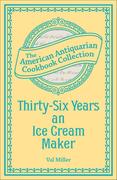
Thirty-Six Years an Ice Cream Maker
Thirty-Six Years an Ice Cream Maker - Receipts and Pointers: ab 4.99 €- Shop: ebook.de
- Price: 4.99 EUR excl. shipping
-

Scriptwriting Structure: To-the-Point Pointers
Scriptwriting Structure: To-the-Point Pointers: ab 4.49 €- Shop: ebook.de
- Price: 4.49 EUR excl. shipping
-
Write Your Book! Publish Your Book! Market Your Book!
Write Your Book! Publish Your Book! Market Your Book! - People Pointers & Products to Sell Your Book: ab 3.99 €- Shop: ebook.de
- Price: 3.99 EUR excl. shipping
-
Doktor Pointers Tagebuch
Doktor Pointers Tagebuch - Heitere und kritische Einblicke in den Alltag eines Arztes: ab 4.99 €- Shop: ebook.de
- Price: 4.99 EUR excl. shipping