Did you mean:
Rekapitulation52 Results for : recapitulation
-

The Toltec Path of Recapitulation
The Toltec Path of Recapitulation - Healing Your Past to Free Your Soul: ab 10.3 €- Shop: ebook.de
- Price: 10.30 EUR excl. shipping
-
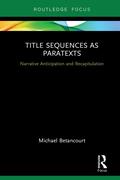
Title Sequences as Paratexts
Title Sequences as Paratexts - Narrative Anticipation and Recapitulation: ab 18.99 €- Shop: ebook.de
- Price: 18.99 EUR excl. shipping
-

The Battle Of Recapitulation
The Battle Of Recapitulation: ab 7.99 €- Shop: ebook.de
- Price: 7.99 EUR excl. shipping
-

God's Presence
God's Presence - A Contemporary Recapitulation of Early Christianity: ab 24.99 €- Shop: ebook.de
- Price: 24.99 EUR excl. shipping
-

The Recapitulation of Israel
The Recapitulation of Israel - Use of Israel's History in Matthew 1:1-4:11: ab 64 €- Shop: ebook.de
- Price: 64.00 EUR excl. shipping
-

Experimental Skin Grafts and Transplantation Immunity
Experimental Skin Grafts and Transplantation Immunity - A Recapitulation: ab 92.99 €- Shop: ebook.de
- Price: 92.99 EUR excl. shipping
-
Die Walküre
“The free man must be his own maker” Richard Wagner’s Ring of the Nibelung refl ects the composer’s autobiography as much as the political turmoil of his times. As work progressed, another fi gure grew to be as important as the hero Siegfried, the god Wotan, the mouthpiece for Wagner’s ideas. “He’s exactly like us: he is the sum of today’s intellectual consciousness, whereas Siegfried is what we hope the human being of the future will be, but who cannot be fashioned by us, and who must make himself by means of our destruction!” Our own doom as the basis of a happier future? Wagner dressed this Herculean task musically in the spreading, shimmering web of his leitmotivic working (there are approximately 20 distinct motives in Die Walküre). Dramaturgically, the conversational style of Das Rheingold gives way to the tone of bourgeois tragedy: incestuous passion, more than one form of deep-seated marital antagonism, and a lot of talk, a lot of self-justifi cation in the form of recapitulation. This, the First Day of the tetralogy (Das Rheingold being a “preliminary evening”), was without doubt the “most moving, the most tragic” of all Wagner’s works in the view of his wife Cosima, expressed in her diary on 31 August 1873. The text of Die Walküre was fi nished on 1 July 1852, and the score was completed in late March 1856. With the fi nancial help of his ever-generous friend (and future father-in-law) Franz Liszt, Wagner went to rest from his labours on the shores of Lake Geneva.- Shop: odax
- Price: 24.38 EUR excl. shipping
-
Die Walküre - Ring Weimar
“The free man must be his own maker”Richard Wagner’s Ring of the Nibelung reflects the composer’s autobiography as much as the political turmoil of his times. As work progressed, another figure grew to be as important as the hero Siegfried, the god Wotan, the mouthpiece for Wagner’s ideas. “He’s exactly like us: he is the sum of today’s intellectual consciousness, whereas Siegfried is what we hope the human being of the future will be, but who cannot be fashioned by us, and who must make himself by means of our destruction!” Our own doom as the basis of a happier future?Wagner dressed this Herculean task musically in the spreading, shimmering web of his leitmotivic working (there are approximately 20 distinct motives in Die Walküre). Dramaturgically, the conversational style of Das Rheingold gives way to the tone of bourgeois tragedy: incestuous passion, more than one form of deep-seated marital antagonism, and a lot of talk, a lot of self-justification in the form of recapitulation. This, the First Day of the tetralogy (Das Rheingold being a “preliminary evening”), was without doubt the “most moving, the most tragic” of all Wagner’s works in the view of his wife Cosima, expressed in her diary on 31 August 1873. The text of Die Walküre was finished on 1 July 1852, and the score was completed in late March 1856. With the financial help of his ever-generous friend (and future father-in-law) Franz Liszt, Wagner went to rest from his labours on the shores of Lake Geneva.- Shop: odax
- Price: 33.30 EUR excl. shipping
-
Late Beethoven
Late Beethoven It is well recognized that during his last years, especially from 1817 on, Beethoven's music underwent a transformation that redefined his legacy. Moreover, in a series of powerful masterstrokes the composer forever enlarged the sphere of human experience. There is disagreement as to when precisely the late style first appeared. There are differences over the extent to which it emerged from internal or external sources, and critics have struggled to describe it's characteristics in a coherent and meaningful way, but few have disagreed about the existence of the phase itself, let alone it's seismic character or it's chief examples: the late sonatas and string quartets, the 'Diabelli' Variations and the bagatelles, the Ninth Symphony and Missa solemmis Sonata Op.101, in A major. The Sonata in A major, op.101, published in Vienna by Steiner,in 1817, is the first of the 'final five' piano sonatas with which Beethoven brought his work on this genre to a close. The crux of this Sonata is contained not in the opening Allegretto ma non troppo, despite it's quiet, lyrical beginning in medias res on the dominant. The suspended quality of the music is enhanced by Beethoven's seamless lyricism, his placement of the exposition in the dominant key, and his avoidance throughout of strong tonic cadences. Following this short movement of yearning quality and the brusque, angular, contrapuntal march in F major which forms the second movement, a more fundamental level of feeling or state of being is uncovered in the slow introduction to the finale, marked Langsam und sehnsuchtsvoll. Here the music is drawn progressively lower in pitch, collapsing onto a soft sustained chord that will serve as a turning-point and a new beginning. This soft chord, which represents the end of the descending progression and the termination of the Adagio, also embodies the a priori condition for the first movement, since it represents the exact sonority in the precise register out of which the opening of that movement has sprung. In view of this, the opening of the Sonata in medias res assumes a new and deeper significance. The importance of this original sound is confirmed by it's transformation, after a short cadenza-like passage, into the actual beginning of the opening movement. This reminiscence lasts a few bars before it dissolves into the emphatic beginning of the finale. The finale is in sonata form, with it's development assigned to a fugato. The fugal textures in the finale unfold with uncompromising determination and virtuosity. Op. 101 is among the most difficult of the sonatas. Beethoven himself once described it as 'hard to play' The A major Sonata marks a major transition in Beethoven's style, pointing unmistakably to the unique synthesis achieved in works of his last decade. Sonata Op. 111,in C minor Beethoven's last Sonata. Op. 111, in C minor, completed in 1822, defines with absolute assurance the two polarities within which his creative consciousness evolved. The two movements completely symbolize the two primary functions of the mind: analysis and synthesis of conflicting elements on the one hand, and transcendence of all oppositions on the other. It is literally and figuratively a lifetime away from the Op.2 group. The first movement of Op. 111 represents the last example of Beethoven's celebrated ' C minor mood', evidenced in a long line of works from the string Trio op.9 and 'Pathetique' Sonata to the Coriolan Overture and Fifth Symphony. The sonata begins with a Maestoso exposing left-hand plunges of the diminished seventh in a dramatic and tightly spaced rhythmic relationship. An effect of parenthetical enclosure is created not only through the sudden thematic and tonal contrast and slowing of tempo but also through the sudden return of the original tempo and agitated musical character. Consequently, the intervening lyrical utterance is isolated, like 'a soft glimpse of sunlight illuminating the dark, stormy heavens', to use imagery of Mann's Kretzschmar in DoktorFaustus. The lyrical passage reaches C major in the recapitulation and it seems to foreshadow the atmosphere of the Arietta finale. The transition to the ensuing Arietta is built into the coda. The rhythm and register of the last bars allude unmistakably to the diminished-seventh chords of the exposition. With the Arietta we enter a new world. In this case it seems offensive to reduce to conceptual analysis a musical experience which so transcends conceptual activity. The movement establishes a sense of immediacy in which the perception of sound creates a state of contemplation. As Claude Palisca said so simply, 'the Adagio molto - a long set of variations in an arietta is so eloquent and so complete that nothing further seems to be required'. 33 Variations on a Waltz by Anton Diabelli Op.120 The 33 Variations on a Waltz by Diabelli. Op. 120 represent Beethoven's most extraordinary single achievement in the art of variation writing. In their originality and power of invention they stand with other late masterpieces such as the Ninth Symphony, the Missa Solemnis, and the last quartets. When Anton Diabelli invited selected composers to write a variation on one of his waltzes, to be published as a collection, Beethoven at first declined to participate but later offered to provide a set of variations on the Diabelli theme. The scope of the work grew and the 33 variations (started in 1819, completed in1823 and dedicated by Beethoven to Antonie Brentano ) were published in June 1823 under the title '33 Veränderungen über einer Walzer von A. Diabelli'. Beethoven used the term Veränderungen, following Bach's title for his 'Aria mit 30 Veränderungen ' ( Goldberg Variations). Together with the Bagatelles Op. 120 Published in 1825, the Variations Op. 120 represents Beethoven's final contribution to the piano literature. Parody lies at the heart of this composition. Beethoven expanded his draft of the work in 1822-3. He left his older variation order intact for the most part, but opened with two new variations (the present Vars. 1 and 2), added many more variations towards the end, and inserted one at the middle of the set. These added variations contribute substantially to the form of the work, imposing not a symmetrical but an asymmetrical plan, an overall progression culminating in the last five variations. The work as we know it is thus to a great extent the product of two conceptions: an original conception and a superimposed conception. The inserted variations added by Beethoven in 1823 contribute a subtle dimension to the set whose implications transcend the purely musical sphere. Most of them are, in one sense or another, parodistic variations, and while this is clear enough on close inspection, it is sufficiently subtle to be overlooked. This issue of parody in Op. 120 is complex. It is interesting that in Op. 120 the overall formal progression of the variations relies heavily on parody of the melody of Diabelli's theme, an idea that, though prominent in the finished piece, is not in evidence in the 1819 draft. Although it is possible to speak of the unity of the whole work, such as we find in other works of the composer, the variations are based on a trivial theme not of the composer's making,thus the complete work spans a tension from ironic caricature to sublime transformation of the waltz of DiabelIi. This extra-musical dimension of parody is essential to a full understanding of the piece, although by it's very nature it is not immediately obvious in the work itself. About the artist Concert pianist, musicologist and educator, Luisa Guembes-Buchanan was born in Lima, Peru, where she received her early musical education at the Conservatorio Nacional de Música. She holds degrees in Performance and Musicology from the Manhattan School of Music, C.W.Post College, New York University and Boston University. Ms. Guembes-Buchanan has given performances throughout the United States, Latin America a- Shop: odax
- Price: 51.97 EUR excl. shipping
-
Piano Recital I
PARTITA No. 2 in C minor, BWV 826 JOHANN SEBASTIAN BACH (1685-1770) Bach's six Partitas date from the ripe period following his move to Leipzig (1723). His first published instrumental works, they appeared individually in the years 1726-31 (the present C minor Partita in 1727) and were assembled as his 'Opus One' in 1731, collectively titled Clavierübung (keyboard Practice or Exercise). According to Bach's first biographer, Johann Nicolaus Forkel, the partitas made 'a great noise in the musical world. Such excellent compositions for the clavier had never been heard before. Anyone who had learnt to perform well some pieces out of them could make his fortune in the world thereby,... they are so brilliant, well sounding, expressive, and always new.' Forkel was correct in his appraisal, and these creations do indeed unfailingly renew themselves. They are effectively playable on piano, harpsichord and clavichord, and lend themselves to a multitude of interpretations. The Partitas (known also as German Suites, as Bach announced, consisted of 'Preludes, Allemandes, Courantes, Sarabandes, Gigues, Minuets, and other Galanteries.' The Partita in C minor opens with a Sinfonia rather than a Preludium which is in effect a three-stage Italian Ouverture beginning with a clarion call to order. The proscribed Allemande, Courante and Sarabande are filled out with a Rondeau (replacing the Menuet} and a vigorous, driving Capriccio in lieu of the concluding Giga. VARIATIONS in F minor, Hob. XVII : 6 SONATA No. 53 in E minor Hob. XVI : 34 JOSEPH HAYDN (1732-1809) The F minor Variations (sometimes commonly known as 'Andante con Variazioni') were composed in 1793, and exemplify the mastery and tremendous emotional breadth of some other late Haydn symphonies. As a matter of fact, one can draw a striking analogy between the Tema of this masterpiece and one of the so-called 'Drumroll' Symphony's second movement: Both of these are double themes consisting of a first part minore, it's sequel in answering maggiore. Of course each variant becomes increasingly more embellished until the coda where a climax of astonishing intensity and subdued drama is joltingly introduced. When young Beethoven was sent to Vienna with a stipend from Count von Waldstein so that the burgeoning composer could study with Haydn and 'regain the soul of Mozart' (who had just died), I daresay that Beethoven did indeed inherit much from Mozart, but Haydn probably had the biggest influence on his young charge. These sublime Theme and Variations offer evidence for this writer's assertion. The Sonata in E minor was first published in July 1773 by Beardmore & Birchall of London but almost certainly, Haydn had composed it considerably earlier. In any event, this E minor Sonata is one of the finest and most popular of the master's 'middle period.' It's first movement, Presto's engaging, disjunctive style is for me reminiscent of C.P.E. Bach innovative mood. One noteworthy feature is the way the music keeps breaking up into small paragraphs and then resuming it's forward course. Such drama and imagination! In contrast, the Adagio slow movement sings with a long, ruminative line. As the movement reaches it's apex, the pulse begins to quicken and, almost without resolution we find ourselves face to face with a sprightly Finale, Vivace molto innocentemente. This linking of these two movements is very much a harbinger of the familiar device used by Beethoven in so many of his mature compositions (e.g. The Fourth and Fifth Piano Concertos, the Violin and Triple Concertos, the Waldstein, Appassionata and Lebewohl Sonatas and the Serioso String quartet). DREI KLAVIERSTÜCKE, Op. 117 JOHANNES B HMS (1833-1897) During the Summer of 1890, Brahms completed his String Quintet in G major, Op. 111 and, in September, sent the manuscript to Fritz Simrock, his publisher. Simrock had hoped Brahms would oblige with a Fifth Symphony and indeed, the composer had begun work on such a score. But, alas, along with the Quintet's manuscript, came a note: ' The time has come for you to say goodbye to any further compositions of mine.' A new symphony was out of the question and Brahms facetiously added further that he had thrown his leftover manuscript paper in the river at the end of his vacation at Bad Ischl. Incentive was restored by a visit to Meiningen in March 1891. The rejuvenating catalyst was an evidently superb musician named Richard Mühfeld and posterity owes to him a substantial debt for causing Brahms' change of heart. Having come forth with two works inspired by Mühlfeld, the Trio for Clarinet, Cello and Piano, Op. 114 and the Quintet for Clarinet and Strings Op. 115, and with his creative juices restored, the 'retired' master, as an extra bounty, penned a superb collection of short piano pieces, Op. 116-119, his two sonatas Op. 120, the Ernste Gesang, Op. 121 and the Chorale Preludes for Organ, Op. 122. The three Intermezzi Op. 117 were published in 1892, the same year as Op. 116. No. 1 in E Flat, an Andante in 6/8 metre with a second section, piu adagio--un poco andante, is a German version of a Scottish cradle song 'Lady Anne Rothwell's Lament' and Brahms follows it so closely that in one section the words can actually be fitted to his melody. The second Intermezzo in B flat minor is likewise, another song without words. It's mood of bittersweet nostalgia is very much akin to the poco Allegretto third movement of the Third Symphony, Op. 90 (Brahms tempo indication for Op.117/2 is Andante non troppo--piu adagio). The triptych is completed by the Intermezzo in C sharp minor (Andante con motto--poco piu lento moto ed espressivo, again inspired by an old ballad. SONATINA (1957) Edino Krieger (1928) Edino Krieger was born in Brusque, Santa Catarina on March 17, 1928. He studied music with his father, a conductor, composer, and founder of the local Conservatory, and later studied the violin with Edith Reis (1943) and composition with Hans-Joachim Koellreutter (1944-48) at the Rio de Janeiro Conservatory, and subsequently had lessons with Aaron Copland at the Berkshire Music Center in Tanglewood and with Peter Mennin (1948-49) at the Juilliard School. His early works were in late Romantic and Impressionist style, but after a brief dodecaphonic period (1947-53), he turned toward neo-Classicism with nationalistic allusions, and fused the latter two styles from 1966. The composer has given his own text for the Sonatina here recorded: 'Composed in 1957, the piano Sonatina belongs to Krieger's neoclassical period. In 1952 the composer abandoned avant-garde experiments in order to heighten his command of traditional forms, with classical and pre-classical styles within a free tonal-modal idiom and incorporating Brazilian thematic elements. The neoclassical phase includes teaching pieces, designed for developing young instrumentalists. Among these works are the Suite for Strings, the Prelude and Fugue and the Sonatina for piano. The Sonatina is in two movements. The first, marked Moderato, begins with a binary Alberti bass, below a ternary melodic line with a cantabile, lyric character. The contrasting marcato second theme appears in the left hand and both themes are worked in a long and dynamic development. The brief recapitulation brings the return of the initial lyric material. The second, Allegro, has a moto perpetuo character and is built upon a wild, undulating melodic figure in the low register. Above this appears an affirmative theme of episodic character, though the initial undulating material predominates throughout.' Music Notes by Harris Goldsmith.- Shop: odax
- Price: 19.59 EUR excl. shipping


